Have you ever paused while writing because you weren’t sure whether to use spelt or spelled? I know this small spelling choice can feel surprisingly confusing, especially when different English varieties use different forms.
You may see both words in books, websites, and everyday conversations, but their usage is not always the same. If you want to write naturally in US English, you need to know when spelled is the standard choice and where spelt may still appear.
In this guide, I’ll make the difference easy to understand, so you can choose the right form with confidence. You’ll learn the meanings, regional usage, examples, and common mistakes without getting buried in complicated grammar rules.
Spelt or Spelled: Quick Answer
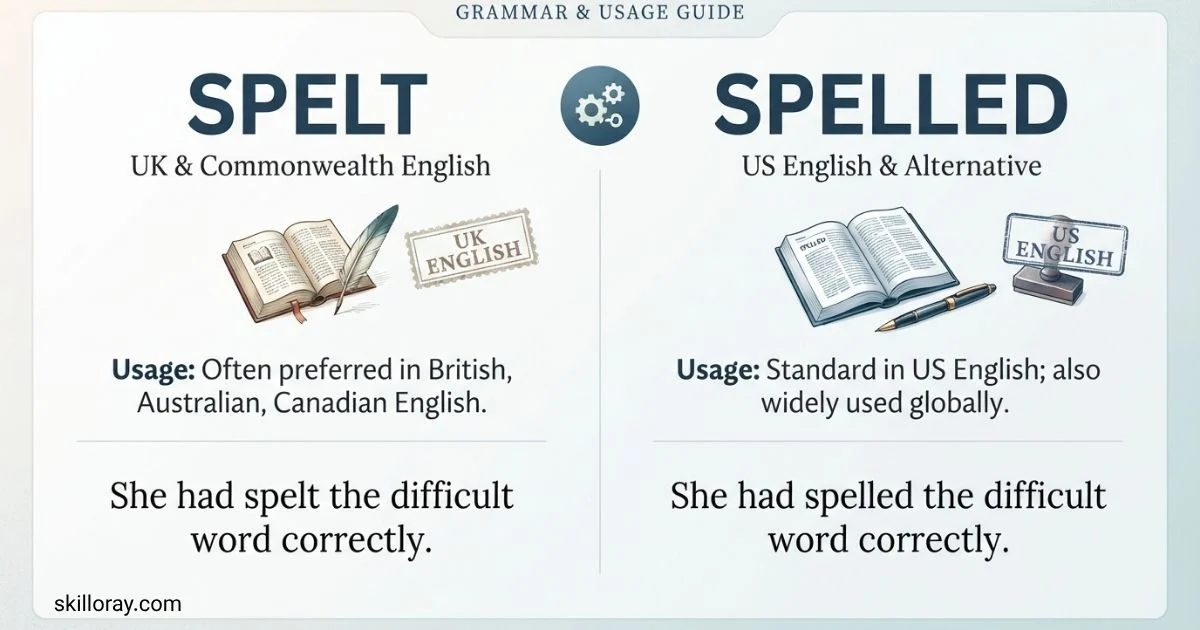
Spelt or spelled are both correct past tense and past participle forms of the verb spell.
| Form | Typical usage | Example |
| spelled | Standard in American English; also used in British English | She spelled my name correctly. |
| spelt | Common in British English | She spelt my name correctly. |
The two forms have the same basic meaning when they are used as forms of the verb spell. The main distinction is regional preference rather than meaning.
What Does Spelled Mean?
Spelled is the regular past tense and past participle form of spell. It means that someone wrote or said the letters of a word in the correct order.
For example:
- I spelled your name correctly.
- She spelled the difficult word correctly.
- He spelled the address incorrectly.
- They spelled the word aloud.
- I have spelled everything correctly.
Spelled is especially common in American English and is a safe choice when following American writing conventions.
Spelled as a Past Tense
Use spelled when talking about an action that happened in the past.
- She spelled her surname for the receptionist.
- The student spelled every word correctly.
- I spelled the word incorrectly on my first attempt.
Spelled as a Past Participle
Spelled can also follow auxiliary verbs such as has, have, or had.
- She has spelled my name correctly.
- They have spelled the word incorrectly.
- He had spelled the name several times.
What Does Spelt Mean?
Spelt can be the past tense or past participle of spell, particularly in British English.
For example:
- She spelt my name correctly.
- I spelt the word incorrectly.
- He has spelt the address correctly.
- They had spelt the name differently.
Oxford lists both spelt or spelled as past tense or past participle forms of spell. Cambridge likewise identifies spelled as the main form while noting spelt as a UK form.
There is also another meaning of spelt. It can refer to a type of grain related to wheat. In that context, it is a noun rather than a form of the verb spell.
For example:
The bakery sells bread made with spelt flour.
Here, spelt refers to the grain.
Is Spelt or Spelled the Past Tense of Spell?

Both spelt or spelled can be the past tense of spell.
Examples include:
- She spelt her name correctly.
- She spelled her name correctly.
- The teacher spelt the word aloud.
- The teacher spelled the word aloud.
The choice generally depends on the variety of English being used. American English normally uses spelled, while British English allows spelt as well as spelled.
The same applies when the word functions as a past participle:
- I have spelt the word correctly.
- I have spelled the word correctly.
Both sentences are grammatically valid.
Spelt or Spelled in British English
In British English, spelt or spelled are both accepted forms.
Spelt is a familiar British form:
- I spelt your surname correctly.
- She spelt the word aloud.
- The name was spelt incorrectly.
Spelled is also completely acceptable:
- I spelled your surname correctly.
- She spelled the word aloud.
- The name was spelled incorrectly.
Cambridge specifically gives spelled with spelt as a UK alternative, while Oxford lists both forms in its verb forms.
Spelt or Spelled in American English
In American English, spelled is the standard form.
For American English writing, these are natural:
- My name is spelled with two Ls.
- She spelled the word incorrectly.
- How is your surname spelled?
- He spelled the address for me.
- The name was spelled correctly on the form.
Spelt as the past tense of spell is generally not the normal American choice. If you are writing specifically for a US audience, spelled is therefore the clearest option.
Spelt or Spelled in Australian English
Australian English can use spelt or spelled. Cambridge identifies spelt as a form used in UK or Australian English, while Australian Broadcasting Corporation style guidance gives examples using spelled.
This means Australian readers may encounter either form.
For example:
- She spelt the word correctly.
- She spelled the word correctly.
Both can be understood as forms of the past tense of spell.
If you are following a particular Australian publication, school, workplace, or style guide, follow its preferred house style for consistency.
My Name Is Spelt or Spelled?
Both forms work in the sentence “My name is spelt or spelled…”
For example:
- My name is spelled with two Ls.
- My name is spelt with two Ls.
The choice depends mainly on your variety of English. Spelled is the usual American form, while spelt is especially familiar in British English. Both forms are recognized as forms of the verb spell.
If you are writing to an American audience, use spelled. If you are following British English, either form can be used.
Do You Say Spelt or Spelled?
You can use spelt or spelled, depending on the English variety you are using.
In American English, you would normally say:
How is your name spelled?
In British English, you may hear:
How is your name spelt?
You may also hear spelled in British English because both forms are accepted.
The pronunciation is slightly different because the endings differ:
- spelt — /spelt/
- spelled — /speld/
The main vowel sound remains the same, while the final consonant differs.
How Do You Pronounce Spelt or Spelled?
Spelt is pronounced approximately:
spelt — /spelt/
It has one syllable and rhymes closely with words such as belt.
Spelled is pronounced approximately:
spelled — /speld/
It also has one syllable.
The pronunciation difference is mainly in the final sound:
- spelt ends with a /t/ sound.
- spelled ends with a /d/ sound.
Oxford lists the pronunciations as /spelt/ for spelt or /speld/ for spelled.
Spelt or Spelled Examples
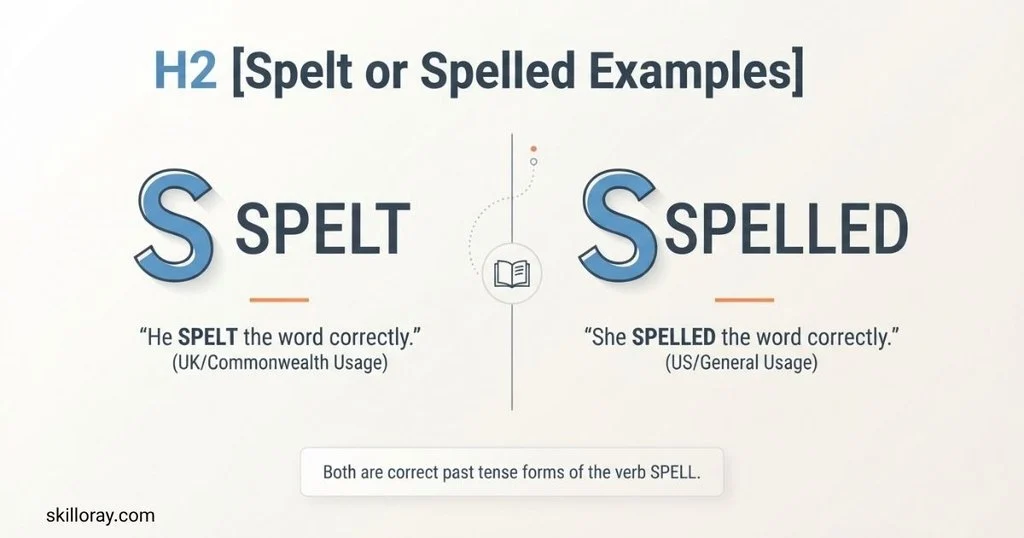
Here are natural examples showing both forms.
Sentences With Spelled
- I spelled your name correctly.
- She spelled the word on the board.
- He spelled my surname incorrectly.
- The teacher spelled the word slowly.
- We spelled every word correctly.
- She spelled the address for me.
- They spelled the name differently.
- I have spelled the word correctly.
- He had spelled the answer incorrectly.
- The sign was spelled incorrectly.
Sentences With Spelt
- I spelt your name correctly.
- She spelt the word on the board.
- He spelt my surname incorrectly.
- The teacher spelt the word slowly.
- We spelt every word correctly.
- She spelt the address for me.
- They spelt the name differently.
- I have spelt the word correctly.
- He had spelt the answer incorrectly.
- The sign was spelt incorrectly.
These examples demonstrate that the grammatical function and basic meaning remain the same when spelt is used as the past tense or past participle of spell.
Incorrectly Spelt or Spelled
The phrase incorrectly spelt or spelled is grammatically possible.
For example:
- The word was incorrectly spelled.
- The word was incorrectly spelt.
- Her surname was incorrectly spelled on the document.
- His name was incorrectly spelt on the form.
Again, the preferred form depends on regional English.
For American English, incorrectly spelled is the natural choice.
For British English, incorrectly spelt or incorrectly spelled can be used.
Is It Spelt or Spelled Wrong?
Both forms can be correct when they refer to the past tense or past participle of spell.
For example:
Is my name spelled correctly?
or:
Is my name spelt correctly?
Neither form is automatically wrong. The important factor is the English variety being followed. American English normally uses spelled, while British English permits spelt or spelled.
If you are asking about the spelling of a different word, however, spelt can also refer to the grain. Context determines the meaning.
Spelt or Spelled: Grammar Explained
The base verb is:
spell
Its relevant forms include:
| Verb form | Form |
| Base form | spell |
| Present tense | spell or spells |
| Past tense | spelt or spelled |
| Past participle | spelt or spelled |
| -ing form | spelling |
For example:
Present:
I spell my name clearly.
Past:
I spelled my name clearly.
or:
I spelt my name clearly.
Past participle:
I have spelled my name clearly.
or:
I have spelt my name clearly.
The difference here is primarily the form preferred by the variety of English, rather than a difference in grammatical meaning.
Common Mistakes With Spelt or Spelled
Mistake 1: Assuming Spelt Is Always Wrong
Incorrect assumption:
“Spelt” is always wrong.
Better understanding:
Spelt is a legitimate past tense and past participle form of spell, particularly in British English.
Mistake 2: Assuming Spelled Is Only American
Incorrect assumption:
British English cannot use “spelled.”
Better understanding:
British English accepts spelled as well as spelt.
Mistake 3: Treating Spelt as Only a Verb
Incorrect assumption:
“Spelt” always means that someone wrote letters incorrectly.
Better understanding:
Spelt can also be a noun referring to a type of grain.
For example:
The recipe uses spelt flour.
Here, spelt is a noun.
Mistake 4: Mixing Styles in Formal Writing
Using different regional conventions throughout the same piece can make writing look inconsistent.
If you are writing in American English, consistently choosing spelled is usually appropriate.
If you are writing in British English, you can use spelt or spelled, but maintaining a consistent style can make the writing easier to read.
Which Should You Use: Spelt or Spelled?
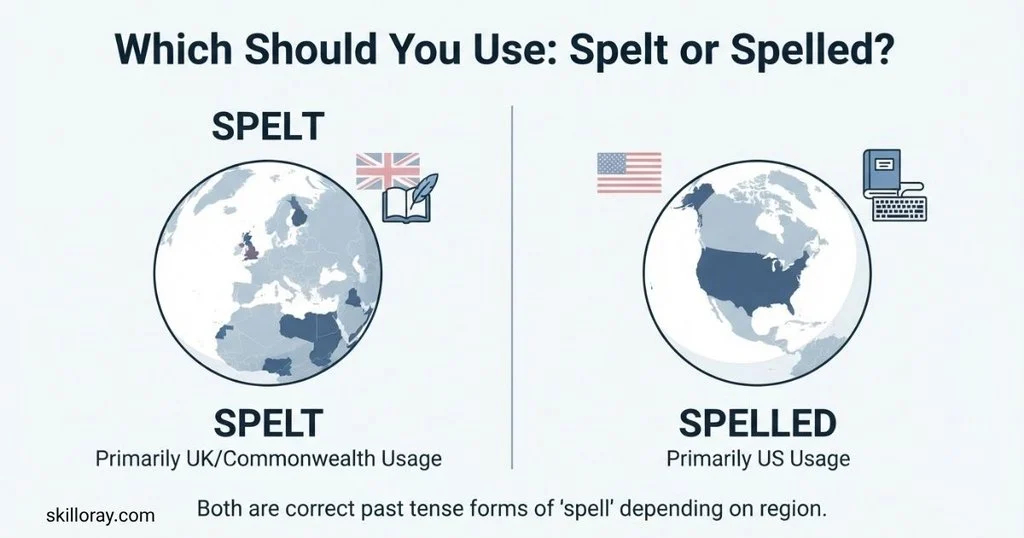
Choose the form according to your audience or the variety of English you are following.
- American English: use spelled.
- British English: use spelt or spelled.
- Australian English: both forms can be encountered.
- Formal writing: follow the style guide used by your school, workplace, publisher, or organization.
- American-focused content: spelled is generally the safest choice.
There is no need to treat spelt as a universal spelling mistake. It is an established form of the verb spell in varieties of English where it is accepted.
Spelt or Spelled in a Sentence
Here are a few quick examples:
She spelled my name correctly.
She spelt my name correctly.
How is your surname spelled?
How is your surname spelt?
The word was spelled incorrectly.
The word was spelt incorrectly.
All of these sentences can be grammatical when the form matches the variety of English being used.
FAQs About Spelt or Spelled
Is spelt or spelled correct?
Spelt or spelled can both be correct forms of the verb spell. Spelled is standard in American English, while British English accepts spelt or spelled.
Is spelt the past tense of spell?
Yes. Spelt can be the past tense of spell, particularly in British English. Spelled is another accepted past tense form.
Is spelled the past tense of spell?
Yes. Spelled is a standard past tense form of spell and is the usual form in American English.
Do British people say spelt or spelled?
British English uses spelt or spelled. Spelt is common, but spelled is also accepted.
Do Americans use spelt?
For the verb spell, American English normally uses spelled. Spelt is not the usual American past tense form, although spelt can also appear as the name of a type of grain.
Is my name spelt or spelled?
Both can be used. For example, “My name is spelled correctly” is standard American English, while “My name is spelt correctly” is also natural in British English.
Is spelt a real word?
Yes. Spelt is a real word with more than one use. It can be the past tense or past participle of spell, and it can also refer to a type of grain.
Is spelled grammatically correct?
Yes. Spelled is grammatically correct as the past tense or past participle of spell. It is the standard form in American English and is also accepted in British English.
Which form should I use in American English?
Use spelled when following standard American English conventions. For example: “She spelled the word correctly.”
Which form should I use in British English?
You can use spelt or spelled in British English. Choose one according to your preferred style and remain consistent throughout your writing.
Conclusion
Spelt or spelled are both legitimate forms of the verb spell. The main difference is regional usage rather than meaning. Spelled is the standard choice in American English, while British English accepts spelt or spelled.
So, if you’re writing for an American audience, spelled is usually the best fit. If you’re following British English, spelt is perfectly acceptable, while spelled is also correct.
The easiest rule to remember is simple: spell → spelt or spelled. Choose the form that matches the English variety and style you are using.

I am Olivia Brown, a professional English editor and grammar writer who believes that great writing begins with a strong foundation in grammar. I have spent years creating educational resources that help students and professionals improve their writing, avoid common errors, and communicate more effectively. I strive to provide clear explanations and practical examples that make grammar easy to understand and apply.
Books: English Grammar Essentials and Modern Writing Success
 James Walker
 Daniel Carter