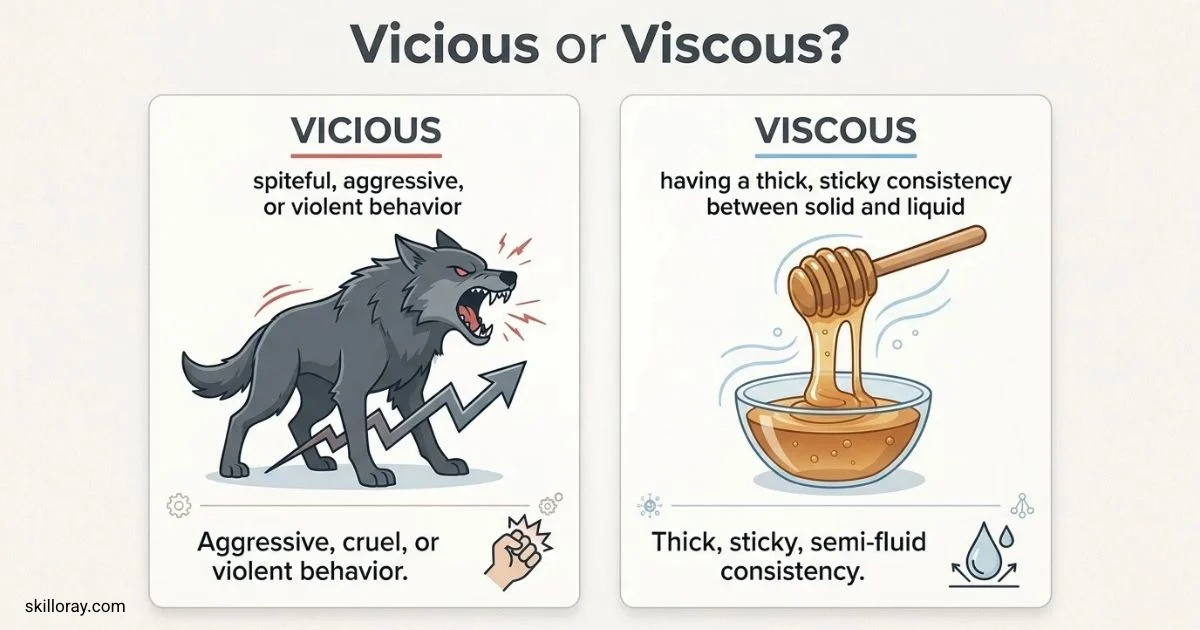
Have you ever paused while writing because you couldn’t decide between vicious and viscous? You’re not alone. These two words look and sound similar, but their meanings are completely different. Choosing the wrong one can change the meaning of your sentence.
I know how confusing English word pairs can be, especially when a single letter makes such a big difference. Vicious describes cruelty, aggression, or harmful behavior, while viscous describes a thick, sticky liquid that flows slowly. Once you understand this distinction, you’ll find it much easier to use both words correctly.
In this guide, you’ll learn the meanings of vicious and viscous, explore clear sentence examples, and discover simple tricks to remember the difference. I’ll help you understand when to use each word so you can write with greater confidence and avoid this common English mistake.
Vicious vs. Viscous: Quick Comparison
| Feature | Vicious | Viscous |
| Meaning | Cruel, aggressive, or harmful | Resistant to flowing easily |
| Common use | People, animals, comments, attacks, and conflicts | Liquids, fluids, and materials |
| Pronunciation | VISH-us | VIS-kus |
| Related noun | Viciousness | Viscosity |
| Example | He made a vicious remark. | The viscous honey flowed slowly. |
The easiest way to remember the difference is to connect vicious with harmful behavior and viscous with viscosity, the scientific term for a fluid’s resistance to flow.
What Does Vicious Mean?

Vicious describes someone or something that is cruel, aggressive, violent, or deliberately hurtful. It can refer to physical aggression, harsh language, personal attacks, or even situations that cause harm.
Imagine two people disagreeing about a workplace decision. One explains their concerns calmly, while the other makes insulting comments intended to embarrass their colleague. Those comments could be described as vicious.
Here are more examples of how the word works in everyday English:
- The journalist faced vicious criticism after publishing the report.
- A vicious dog barked at strangers who approached its territory.
- She responded to the accusation with a vicious remark.
- The two rivals exchanged vicious insults during the argument.
- The team fought through a vicious competition to reach the final.
Notice that vicious doesn’t always mean physically violent. A person’s words can be vicious when they’re intended to hurt or humiliate someone.
Common Expressions With Vicious
You’ll often encounter vicious in familiar English expressions. Understanding these phrases will help you recognize the word in different contexts.
Vicious attack: A cruel or aggressive attack, either physical or verbal.
Example: The public figure faced a vicious attack from online critics.
Vicious rumor: A harmful or malicious story about someone.
Example: A vicious rumor damaged the employee’s reputation.
Vicious cycle: A repeating pattern in which one problem causes another, making the original problem worse.
Example: Poor sleep can lead to tiredness, which makes it harder to sleep well the following night. This can create a vicious cycle.
Vicious circle: Another expression for a vicious cycle.
Example: Falling sales and rising costs created a vicious circle for the small business.
These expressions share an idea of harm, hostility, or a damaging pattern. However, vicious cycle doesn’t necessarily involve someone acting cruelly. It describes a problem that keeps reinforcing itself.
What Does Viscous Mean?
Viscous describes a fluid that resists flowing easily. In everyday language, people often use it to describe liquids that seem thick or move slowly.
Think about pouring water and honey from separate containers. Water flows readily, while honey generally moves more slowly under comparable conditions. Honey has a higher viscosity than water.
Viscosity is the property that explains this difference. Temperature can also affect how readily a fluid flows, so the same substance may behave differently when it’s warmer or colder.
Here are some examples of viscous in a sentence:
- The viscous honey slowly dripped from the spoon.
- The mechanic selected an oil with the appropriate viscosity for the engine.
- The scientist measured the viscosity of the liquid in the laboratory.
- The thick sauce had a viscous consistency.
- The viscous fluid moved slowly through the narrow pipe.
In each example, the word describes a physical property rather than cruelty or aggression.
Where Is Viscous Commonly Used?
You’ll see viscous in cooking, engineering, science, and everyday descriptions of liquids.
Viscous liquid: A liquid that resists flowing easily.
Example: The viscous liquid took several minutes to drain from the container.
Viscous fluid: A fluid whose resistance to flow matters in a particular situation.
Example: Engineers studied how the viscous fluid moved through the pipeline.
Viscous oil: Oil whose resistance to flow affects how it moves and performs.
Example: The mechanic checked whether the oil’s viscosity suited the engine’s operating conditions.
Viscous substance: A material described in terms of its thick consistency or flow behavior.
Example: The viscous substance clung to the inside of the container.
In technical writing, viscous is more precise than simply saying thick. Thickness is an everyday description, while viscosity refers to a fluid’s resistance to flow.
How to Pronounce Vicious and Viscous
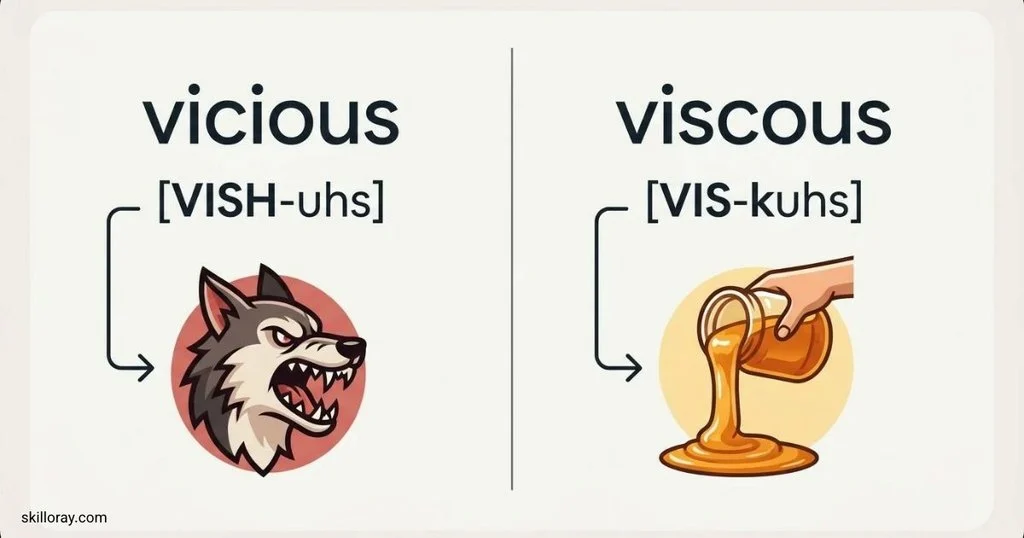
Pronunciation is another useful clue because the words have a slightly different sound in their second syllables.
- Vicious: VISH-us, /ˈvɪʃ.əs/
- Viscous: VIS-kus, /ˈvɪs.kəs/
In vicious, the middle consonant sound resembles the “sh” sound in ship. In viscous, the “s” sound remains distinct before the “k” sound.
Say the words aloud a few times: vicious, viscous. Listening for that difference can help you recognize them in conversation, although the meaning of the sentence remains the most reliable guide.
Vicious vs. Viscous: Examples That Show the Difference
Sometimes, comparing similar sentences is the fastest way to understand two commonly confused words.
| Sentence | Correct word | Why it fits |
| The reporter wrote a ___ article attacking the politician. | Vicious | The article contains cruel or aggressive criticism. |
| The ___ syrup moved slowly down the bottle. | Viscous | The syrup resists flowing easily. |
| He made a ___ comment about his colleague. | Vicious | The comment was deliberately hurtful. |
| The scientist examined the ___ solution. | Viscous | The word describes the solution’s flow properties. |
| The argument turned into a ___ exchange of insults. | Vicious | The exchange became hostile and hurtful. |
| The mechanic tested the oil’s ___ before using it. | Viscosity | The noun refers to resistance to flow. |
The main distinction is straightforward: vicious describes harmful behavior or qualities, while viscous describes a fluid’s resistance to flowing.
Common Mistakes to Avoid
A single spelling mistake can change what your sentence means. Here are four examples worth remembering.
Incorrect: The vicious honey dripped from the jar.
Correct: The viscous honey dripped from the jar.
Honey doesn’t demonstrate cruelty or aggression. The sentence describes how slowly it flows, so viscous is correct.
Incorrect: She made a viscous comment about her classmate.
Correct: She made a vicious comment about her classmate.
The comment was hurtful, so vicious expresses the intended meaning.
Incorrect: The scientist studied the vicious fluid.
Correct: The scientist studied the viscous fluid.
The sentence concerns the fluid’s physical properties, making viscous the appropriate choice.
Incorrect: The politician launched a viscous attack against his opponent.
Correct: The politician launched a vicious attack against his opponent.
Here, vicious describes a harsh or aggressive attack. The word viscous would make sense only if the discussion concerned a fluid’s resistance to flow.
How to Remember the Difference
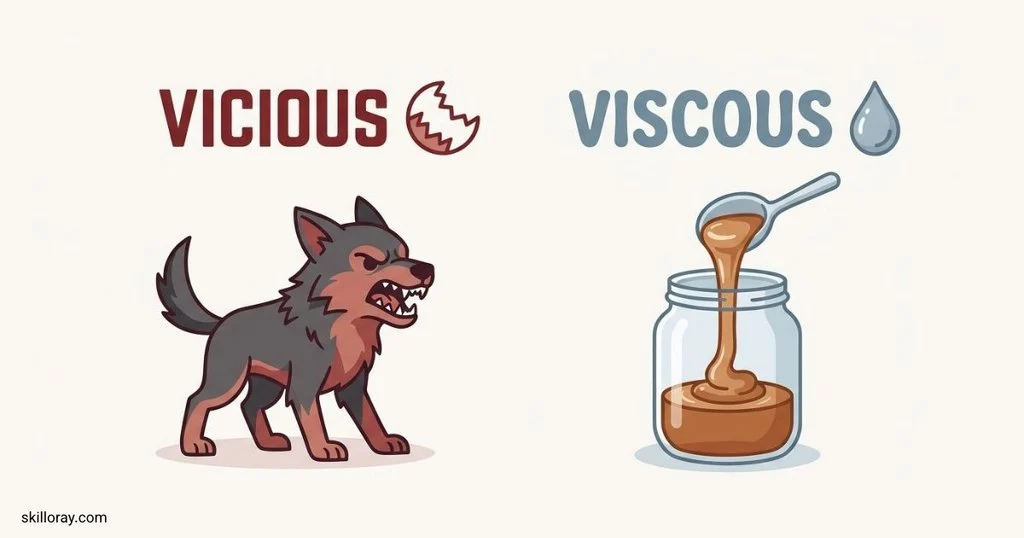
If you regularly mix up these words, two simple associations can help.
Vicious = violence or cruelty.
Think of a vicious attack, a vicious insult, or a vicious rumor. The word describes something aggressive, hostile, or harmful.
Example: The actor received vicious comments on social media.
Viscous = viscosity.
Think of honey, syrup, or oil moving through a container. These substances have different viscosities, which affect how readily they flow.
Example: The viscous syrup poured slowly over the pancakes.
Here’s a quick rule to use when you’re writing:
- If you’re describing someone’s behavior, an insult, or an aggressive attack, choose vicious.
- If you’re describing how a fluid flows, choose viscous.
- If you’re naming the property that measures resistance to flow, choose viscosity.
This connection works because viscous and viscosity belong to the same word family.
Test Your Understanding: Vicious or Viscous?
Try these three questions before checking the answers. Each one tests a different use of the words.
- The journalist received a ______ response after publishing the controversial article.
- The ______ honey moved slowly from the spoon.
- The laboratory measured the ______ of the experimental fluid.
Answers:
- Vicious — The response was hostile or hurtful.
- Viscous — The honey resisted flowing easily.
- Viscosity — This noun names the fluid’s resistance to flow.
If you answered all three correctly, you’ve understood the main distinction. If you missed one, return to the quick comparison and focus on what the sentence describes.
Frequently Asked Questions
Is it vicious or viscous?
Both spellings are correct, but they have different meanings. Vicious means cruel, aggressive, or harmful. Viscous describes a fluid that resists flowing easily.
For example, a vicious remark can hurt someone, while viscous honey flows slowly.
What is the main difference between vicious and viscous?
The difference lies in what each word describes. Vicious refers to cruelty, aggression, or harmful behavior. Viscous refers to a fluid’s resistance to flow.
Remember vicious for behavior and viscous for fluids.
Can vicious describe a person?
Yes. Vicious can describe a person who behaves cruelly, violently, or aggressively. It can also describe that person’s actions, remarks, or attacks.
Example: The manager made a vicious comment during the meeting.
Does viscous mean sticky?
Not exactly. Viscous describes resistance to flow, while sticky describes how readily something adheres to a surface. A substance can be both viscous and sticky, but the words aren’t interchangeable in every context.
For example, honey is viscous and can also stick to your fingers.
What is the noun form of viscous?
The noun form is viscosity. It describes a fluid’s resistance to flow.
Example: The viscosity of honey is generally higher than that of water under comparable conditions.
What is the noun form of vicious?
The noun form is viciousness, which refers to cruelty, aggression, or a harmful quality.
Example: The viciousness of the personal attack surprised the audience.
What does vicious cycle mean?
A vicious cycle is a repeating pattern in which one problem contributes to another, making the original problem worse.
For example, financial stress may interfere with sleep, and poor sleep may make it harder to manage daily responsibilities. The problems can reinforce each other.
How do you pronounce vicious and viscous?
Vicious is commonly pronounced VISH-us, while viscous is pronounced VIS-kus. Their second syllables sound different, which can help you distinguish them when speaking.
Final Thoughts
Remember this simple contrast: vicious describes cruelty, while viscous describes resistance to flow.
A vicious comment can hurt someone’s feelings. Viscous honey, on the other hand, moves slowly from a spoon. The words look alike, but their meanings have little in common.
When you’re unsure which spelling to use, ask yourself one question: Am I describing harmful behavior or the way a fluid flows? That quick check will help you choose the correct word and write with confidence.

I am Olivia Brown, a professional English editor and grammar writer who believes that great writing begins with a strong foundation in grammar. I have spent years creating educational resources that help students and professionals improve their writing, avoid common errors, and communicate more effectively. I strive to provide clear explanations and practical examples that make grammar easy to understand and apply.
Books: English Grammar Essentials and Modern Writing Success
 Daniel Carter
 James Walker