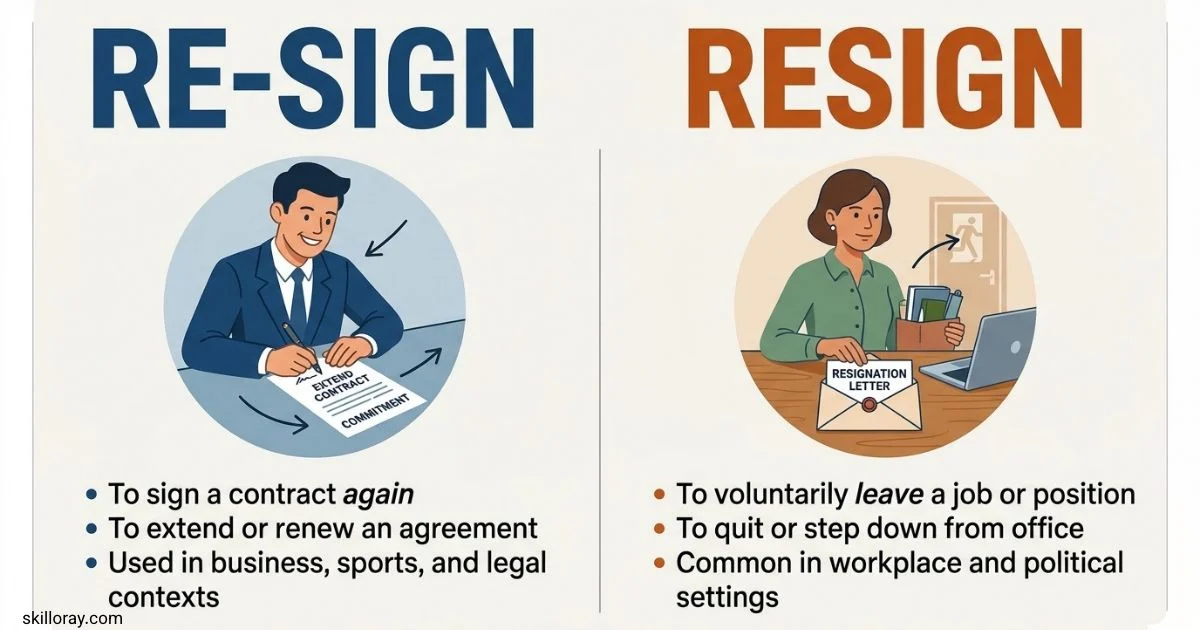
Have you ever paused while writing because re-sign and resign look almost identical but mean completely different things? You’re not alone! One tiny hyphen can change your entire message, and using the wrong word can leave your readers confused.
I want to make this common grammar challenge simple for you. Re-sign means to sign something again or renew an agreement, while resign means to leave a job or position. Once you understand this difference, you’ll find it much easier to choose the right word.
In this guide, you’ll discover the meanings of re-sign and resign, see clear examples, and learn practical tips to avoid common mistakes. Whether you’re writing a work email, discussing a contract, or improving your English, you’ll know exactly which word to use.
Re-Sign vs. Resign: Quick Answer
| Word | Meaning | Example |
| Re-sign | Sign again or renew an agreement | The club will re-sign its goalkeeper. |
| Resign | Leave a job or position voluntarily | The manager will resign next month. |
The easiest way to remember the distinction is to think of re- as meaning “again.” When someone re-signs a contract, they’re signing again or renewing an agreement. When someone resigns, they’re stepping down from a position.
What Does Re-Sign Mean?
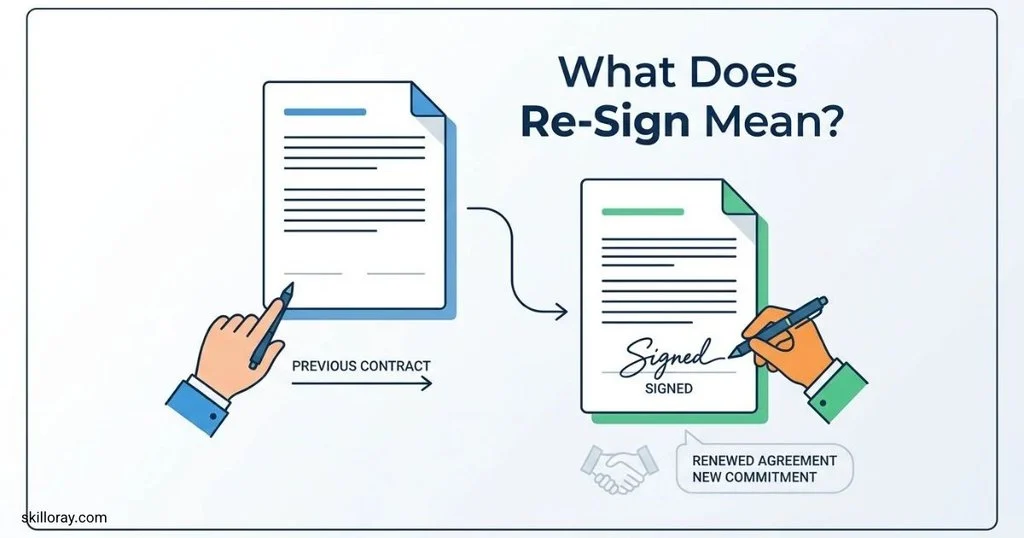
Re-sign means to sign a document, contract, or agreement again. It can also refer to renewing an existing agreement, particularly in sports, employment, and business.
Imagine that a basketball player’s contract is about to expire. The team offers the player a new contract, and both sides agree to continue working together. The player has re-signed with the team.
The same word applies outside sports. A landlord might ask a tenant to re-sign a lease, or a business might renew an agreement with a supplier.
Examples of Re-Sign in a Sentence
- The football club hopes to re-sign its star striker before the season begins.
- I had to re-sign the form because I missed a required section.
- The company plans to re-sign the supplier for another year.
- She agreed to re-sign her apartment lease for 12 months.
- The basketball team announced that it had re-signed its head coach.
In each example, someone signs again or renews an agreement.
When Should You Use Re-Sign?
Use re-sign when the action involves signing again or renewing an arrangement. You’ll often see it in sports reports, employment agreements, rental contracts, and business announcements.
For example, a headline reading “Company Re-Signs CEO for Another Year” means the company has renewed its agreement with the CEO.
Keep the hyphen. Without it, readers may interpret the word as resign, which has a very different meaning.
What Does Resign Mean?
Resign means to voluntarily leave a job, leadership position, or official responsibility. Someone might resign to accept another opportunity, deal with changing priorities, or move on from a role.
Unlike re-sign, resign doesn’t mean signing a document again. It describes the decision to step down or quit a position.
For example, if a school principal announces that they’ll leave their role at the end of the academic year, the principal is resigning.
Examples of Resign in a Sentence
- She decided to resign from her job after accepting another offer.
- The company director announced that he would resign at the end of the month.
- He plans to resign from the committee after completing his current project.
- The mayor resigned from office following a public announcement.
- I intend to resign from my position once my notice period ends.
These sentences describe people leaving their roles rather than renewing agreements.
When Should You Use Resign?
Use resign when someone chooses to leave a job, office, or official position. It commonly appears in workplace emails, formal announcements, news articles, and discussions about career changes.
For instance, an employee might submit a resignation letter to notify their employer that they’re leaving. A company executive might resign from a leadership position, while a politician might resign from public office.
Remember that resign doesn’t automatically mean someone is retiring. A person can resign and move straight into another job.
Why Does the Hyphen Matter?

The hyphen distinguishes re-sign from resign, preventing a reader from confusing two different actions.
Consider these examples:
- The player will re-sign with the club. The player is renewing or signing another contract.
- The player will resign from the club’s board. The player is leaving a position on the board.
Notice that the second sentence doesn’t necessarily mean the player is leaving the team. It means they’re leaving their board position. The context tells you which role they’re stepping down from.
This distinction matters in headlines, where a single missing hyphen can make a story sound very different from its intended meaning.
For example:
- “Coach Re-Signs for Another Season” means the coach has agreed to continue under a renewed agreement.
- “Coach Resigns Before the Season” means the coach is stepping down.
If you’re writing about a contract renewal, include the hyphen. If you’re writing about someone leaving a position, leave it out.
Common Mistakes With Re-Sign and Resign
Even experienced writers can mix up these words. Here are three mistakes worth watching for.
1. Using Resign When You Mean Re-Sign
Incorrect: The club hopes to resign its goalkeeper for another season.
Better: The club hopes to re-sign its goalkeeper for another season.
The hyphen makes it clear that the club wants to renew the goalkeeper’s agreement, not that the goalkeeper is leaving a position.
2. Using Re-Sign When You Mean Resign
Incorrect: She decided to re-sign from her position as manager.
Correct: She decided to resign from her position as manager.
The employee is leaving the role, so resign is the correct word.
3. Assuming Resigning Always Means Leaving a Company
Someone can resign from a specific position without leaving the entire organization.
For example, a person might resign as department head but remain employed by the same company in another role. The word describes leaving the position, not necessarily ending every relationship with the organization.
How to Remember the Difference
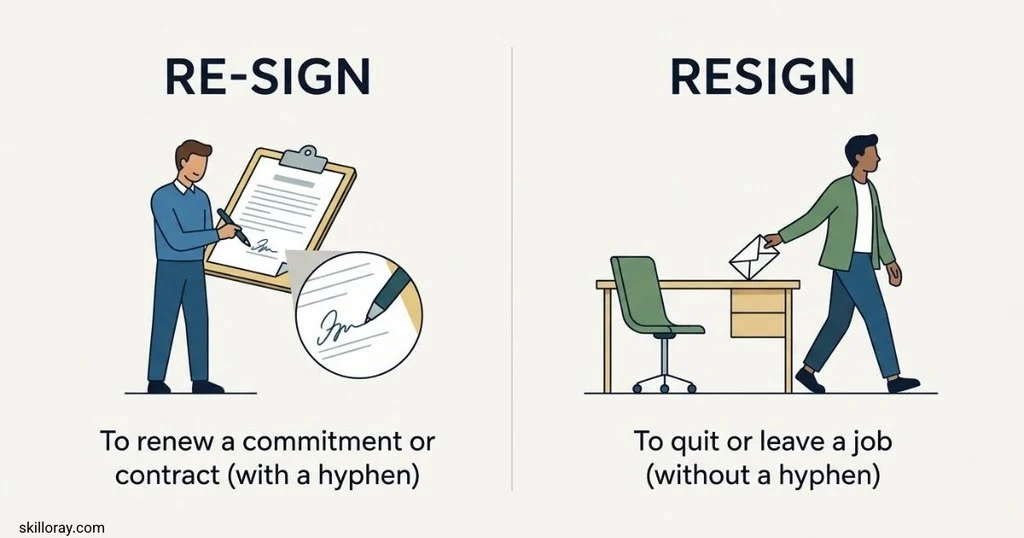
Here’s a quick memory trick:
- Re-sign = sign again. Think of a renewed contract, a second signature, or an agreement that continues.
- Resign = leave a position. Think of an employee quitting a job or a leader stepping down.
When you’re unsure, replace the word in your sentence with a simple phrase.
If “sign again” or “renew the agreement” makes sense, use re-sign. If “leave the job” or “step down” fits, use resign.
This quick test works for most everyday writing, from business emails to news headlines.
Frequently Asked Questions
Is It Re-Sign or Resign a Contract?
Use re-sign when someone signs a contract again or renews an agreement. For example, “The company agreed to re-sign the supplier for another year.”
Resign generally refers to leaving a position, not renewing a contract.
Is Re-Sign Hyphenated?
Yes. When it means signing again or renewing an agreement, re-sign is normally written with a hyphen. The hyphen distinguishes it from resign, which means leaving a position.
Does Resign Mean to Sign Again?
No. Resign means to voluntarily leave a job, office, or position. Re-sign means to sign again or renew an agreement.
What Is the Difference Between Resign and Retire?
Resign means voluntarily leaving a job or position. Retire generally means leaving working life permanently or ending a career. Someone can resign and accept another job, while retirement usually marks a longer-term departure from work.
Final Takeaway
The difference between re-sign and resign is simple once you focus on the action.
Use re-sign when someone signs again or renews an agreement. Use resign when someone voluntarily leaves a job, position, or official role.
If you remember just one thing, remember this: re-sign means sign again; resign means step down. That small hyphen can make a big difference in clear, professional writing.

I am Daniel Carter, a grammar enthusiast and language educator with over 10 years of experience helping students and professionals improve their English writing and communication skills. I enjoy simplifying complex grammar rules into easy-to-understand lessons that anyone can follow. My goal is to help learners write with confidence, avoid common mistakes, and develop strong communication skills for academic and professional success. I regularly create practical grammar guides, writing tips, and language resources that make learning both enjoyable and effective.
Books: Mastering English Grammar and The Complete Guide to Better Writing
 Olivia Brown
 James Walker