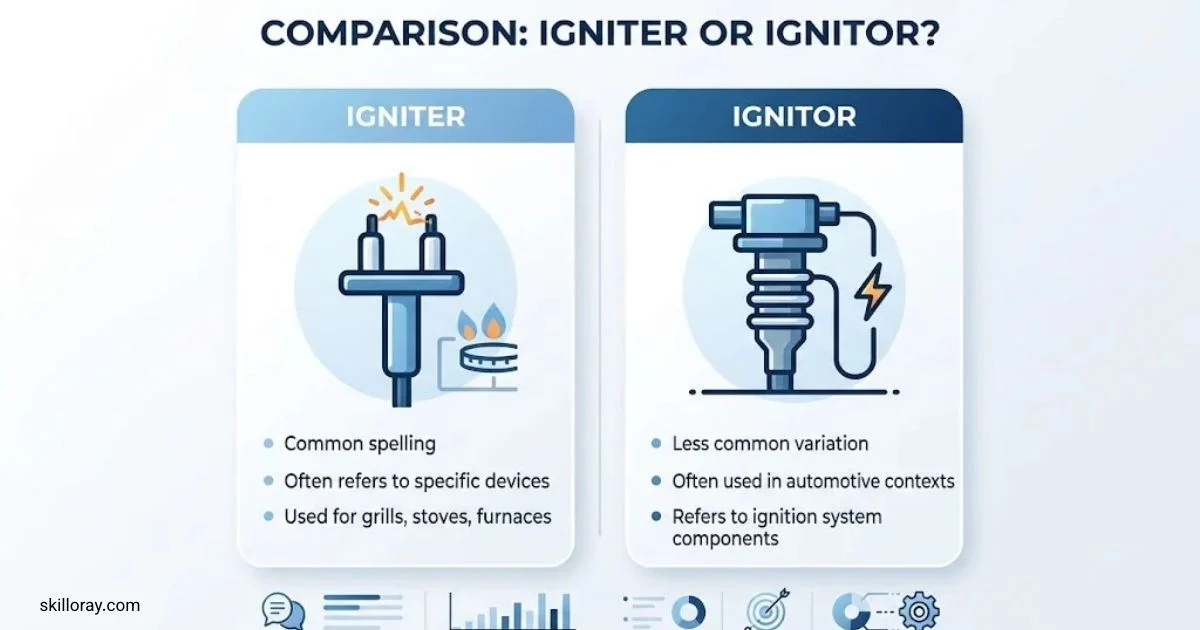
Have you ever stopped while writing and wondered whether igniter or ignitor is the correct spelling? You’re not alone! These two words look almost identical, making it easy to second-guess yourself.
I’m here to help you understand the difference without confusing grammar rules or complicated explanations. You’ll learn what each word means, how people use it, and which spelling is generally preferred in American English.
By the end of this guide, you’ll know when to use igniter or ignitor with greater confidence. I’ll also share clear examples and practical tips to help you avoid common spelling mistakes in your everyday writing.
Igniter vs. Ignitor: What’s the Difference?
The main difference is spelling, not meaning. Both words can describe a device that initiates ignition.
| Spelling | Meaning | When to use it |
| Igniter | A person or device that starts combustion | General writing and product descriptions |
| Ignitor | A person or device that starts combustion | General and specialized contexts where this spelling is used |
You might encounter either spelling in appliance listings, equipment catalogs, or technical documents. Manufacturers may also use one form consistently for their products.
For example, if your furnace manual calls a component an ignitor, use that spelling when discussing the specific part. There’s no need to change it simply because you usually write igniter.
What Does Igniter Mean?
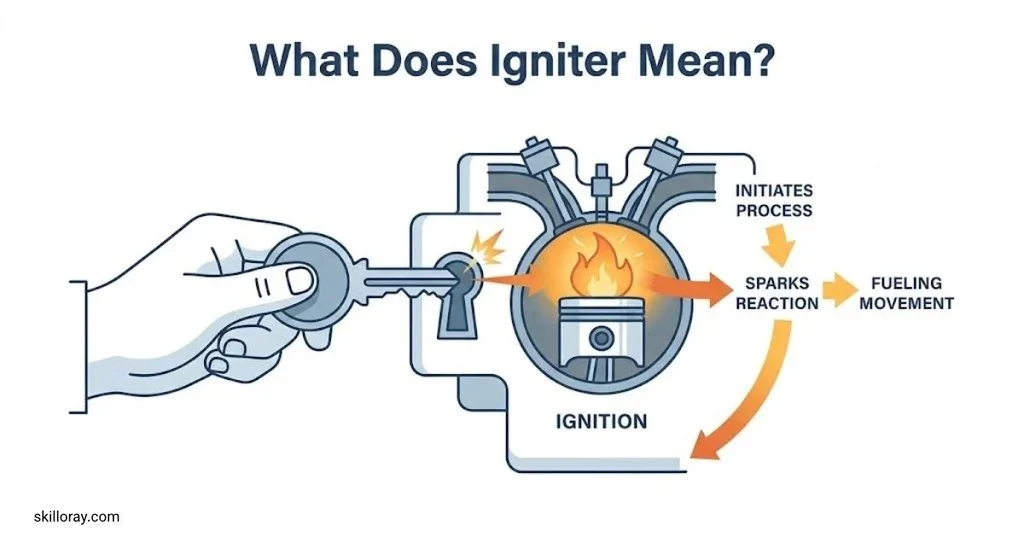
An igniter is something that starts the ignition process. In appliances and machinery, it commonly refers to a component that creates the spark or heat needed to begin combustion.
Here are a few examples:
- The gas grill’s igniter stopped working before the cookout.
- A technician replaced the faulty igniter in the heating system.
- The stove uses an electric igniter to help light its burners.
In each sentence, igniter refers to a component involved in starting combustion.
What Does Ignitor Mean?
Ignitor has the same basic meaning as igniter. It can describe a device that initiates ignition and appears in product descriptions and technical terminology.
Consider these examples:
- The replacement ignitor arrived with the other furnace parts.
- The technician checked the ignitor during the inspection.
- The equipment catalog lists a compatible ignitor for the unit.
These sentences use the alternative spelling correctly. If you’re writing about a particular product, follow the wording in its official documentation rather than assuming one spelling is always preferred.
Why Are Both Spellings Used?
English has many words with different endings, including -er and -or. These endings often appear in words describing people or things that perform an action, although they aren’t interchangeable in every word.
Both igniter and ignitor are established spellings. Their meanings overlap, and neither should automatically be treated as a spelling mistake.
Usage can vary between publications, product manufacturers, and technical sources. Rather than assuming that one spelling belongs exclusively to a particular industry, check a reliable dictionary or the relevant documentation.
Which Spelling Should You Use?
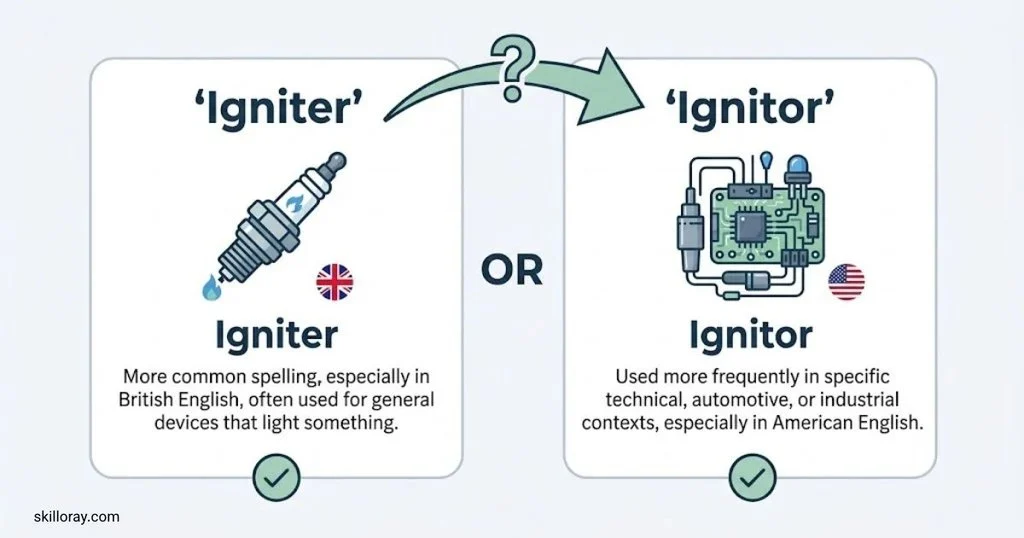
Your choice depends on what you’re writing.
For general American English: Use igniter as a practical default when no specific spelling preference applies.
Example: The igniter on my gas grill needs to be replaced.
For technical writing: Check the terminology used in the relevant manual, specification, or industry reference. Consistency matters when describing equipment and its components.
Example: The service manual identifies the replacement component as an ignitor.
For SEO content: Include both spellings when they genuinely help answer the reader’s question. Explain their shared meaning clearly instead of repeating the keywords throughout the page.
Common Mistakes to Avoid
Writers sometimes assume that the less familiar spelling must be incorrect. That isn’t a reliable rule.
| Incorrect assumption | More accurate explanation |
| Ignitor is always wrong. | Ignitor is an established alternative spelling. |
| The two words always have different meanings. | They generally share the same basic meaning. |
| One spelling is correct in every technical context. | Usage can depend on the source or manufacturer. |
| Both spellings should be mixed throughout an article. | Choose one as your default and remain consistent. |
If you’re naming a specific replacement part, use the spelling shown in the manufacturer’s documentation. That makes it easier for readers to match your wording with the product they’re looking for.
Frequently Asked Questions
Is igniter or ignitor correct?
Both are correct spellings. Each can refer to a person or device that starts combustion. The preferred form depends on the context and spelling convention being followed.
Is ignitor a real word?
Yes. Ignitor is an established alternative spelling of igniter. It isn’t automatically a typo just because another source uses the spelling with -er.
Is igniter more common in American English?
Igniter is a familiar choice in American English and works well as a general default. However, the relative frequency of the two spellings can vary by source and context, so specific claims about which is more common should be checked against reliable usage evidence.
Do igniter and ignitor mean different things?
Generally, no. Both refer to a person or device that initiates ignition. Any difference is usually related to spelling preference or terminology rather than a distinct meaning.
What is the plural of igniter and ignitor?
The plural of igniter is igniters, while the plural of ignitor is ignitors.
Examples:
- The technician replaced two faulty igniters.
- The supplier stocks several types of ignitors.
Which spelling should I use in a product description?
Use the spelling found in the manufacturer’s official product information when referring to a specific component. For a general description, igniter is a practical option.
Final Answer: Igniter or Ignitor?
Both igniter and ignitor are correct, and they share the same basic meaning. For general American English, igniter is a sensible default. When discussing a particular appliance or replacement part, follow the spelling used in its official documentation.

I am Olivia Brown, a professional English editor and grammar writer who believes that great writing begins with a strong foundation in grammar. I have spent years creating educational resources that help students and professionals improve their writing, avoid common errors, and communicate more effectively. I strive to provide clear explanations and practical examples that make grammar easy to understand and apply.
Books: English Grammar Essentials and Modern Writing Success
 Daniel Carter
 James Walker