Have you ever wondered how to describe fixing a technical problem in the past? Whether you solved a computer issue, repaired a device, or helped someone fix a system, choosing the correct verb form matters. The word troubleshoot can be confusing because its past tense doesn’t follow the usual spelling pattern.
The past tense of troubleshoot is troubleshot, not troubleshooted. If you want to use this verb correctly in everyday conversations, professional writing, or English grammar, understanding its forms will make things much easier.
In this guide, I’ll explain the past tense of troubleshoot, its meaning, pronunciation, and correct usage with simple examples. You’ll also learn how to use troubleshot in sentences and avoid common grammar mistakes.
Quick Answer: What Is the Past Tense of Troubleshoot?
The past tense of troubleshoot is troubleshot. The past participle is the same.
| Verb Form | Word | Example |
| Base form | Troubleshoot | I troubleshoot computer problems. |
| Third-person singular | Troubleshoots | She troubleshoots network issues. |
| Simple past | Troubleshot | He troubleshot the printer. |
| Past participle | Troubleshot | We have troubleshot this issue before. |
| Present participle | Troubleshooting | They are troubleshooting the system. |
The three main forms are:
Troubleshoot → Troubleshot → Troubleshot
Troubleshot or Troubleshooted: Which Is Correct?
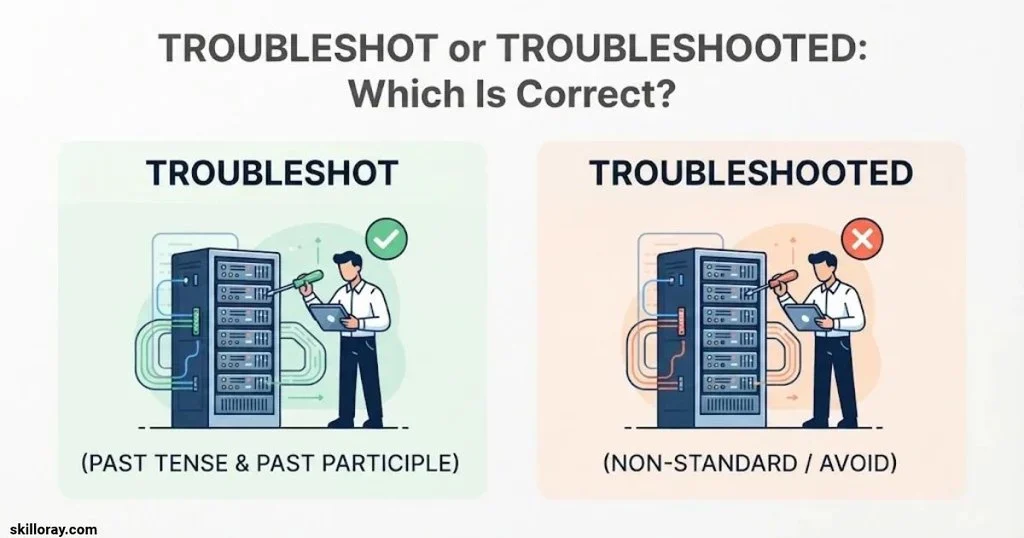
Both troubleshot and troubleshooted appear in English usage, but they don’t have the same level of dictionary support.
Troubleshot is the established irregular form. It follows the pattern of shoot, whose past tense is shot. Cambridge and Oxford list troubleshot as the past-tense and past-participle form.
Troubleshooted is also recorded as a variant by Dictionary.com. You may encounter it in informal writing and technical discussions, although it is less widely recommended in major learner’s dictionaries.
Compare the two forms:
- The technician troubleshot the faulty printer.
- The technician troubleshooted the faulty printer.
If you’re writing a school assignment, professional report, technical article, or business email, troubleshot is the safer choice.
Why Does Troubleshoot Change to Troubleshot?
Troubleshoot is an irregular compound verb made from trouble and shoot. Its past tense follows the verb shoot, which changes to shot rather than adding -ed.
You can see the same pattern in other verbs:
| Base Form | Past Tense | Past Participle |
| Shoot | Shot | Shot |
| Troubleshoot | Troubleshot | Troubleshot |
| Overshoot | Overshot | Overshot |
| Reshoot | Reshot | Reshot |
This is why troubleshot is the traditional irregular form.
Not every verb follows the regular pattern of adding -ed. Some change their spelling, while others keep the same form in the past tense and past participle.
Examples of Troubleshot in Sentences
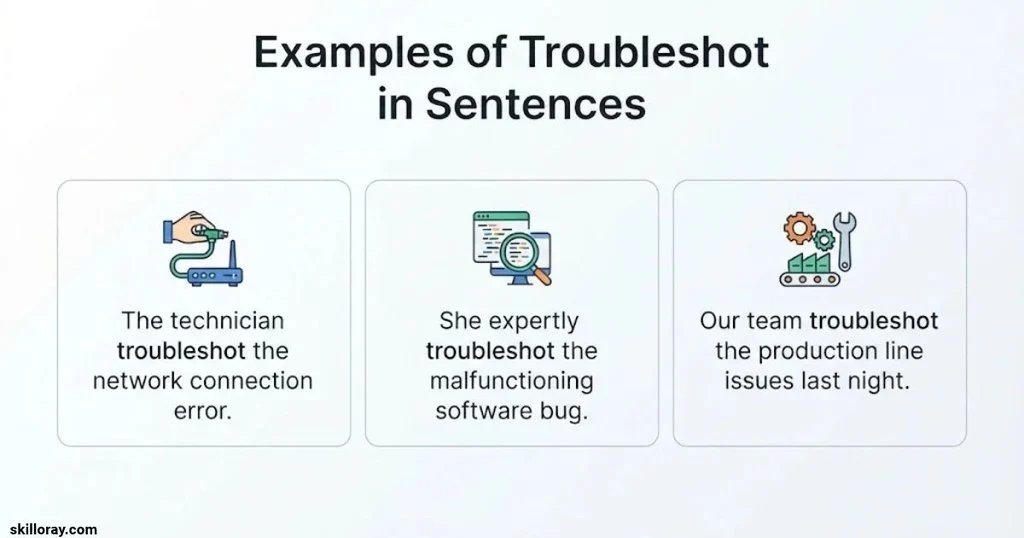
The verb troubleshoot means to identify the cause of a problem and try to fix it. It is common in technology, engineering, customer support, and other fields where people deal with faulty equipment or systems.
Here are some examples showing how to use troubleshot naturally.
Computers and software
- I troubleshot my laptop after it stopped responding.
- The developer troubleshot the software error before releasing the update.
- Our IT department troubleshot the login issue during the morning shift.
Machines and equipment
- The mechanic troubleshot the engine problem before replacing any parts.
- She troubleshot the printer when it refused to connect to the office network.
- The engineer troubleshot the machine and discovered a damaged component.
Workplace and customer support
- The support team troubleshot the customer’s internet connection.
- We troubleshot several technical issues before the online meeting.
- He troubleshot the payment system after customers reported failed transactions.
These sentences show that troubleshot can describe a completed investigation, whether the problem involves a small device or a larger technical system.
Troubleshoot, Troubleshot, and Troubleshooting: What’s the Difference?
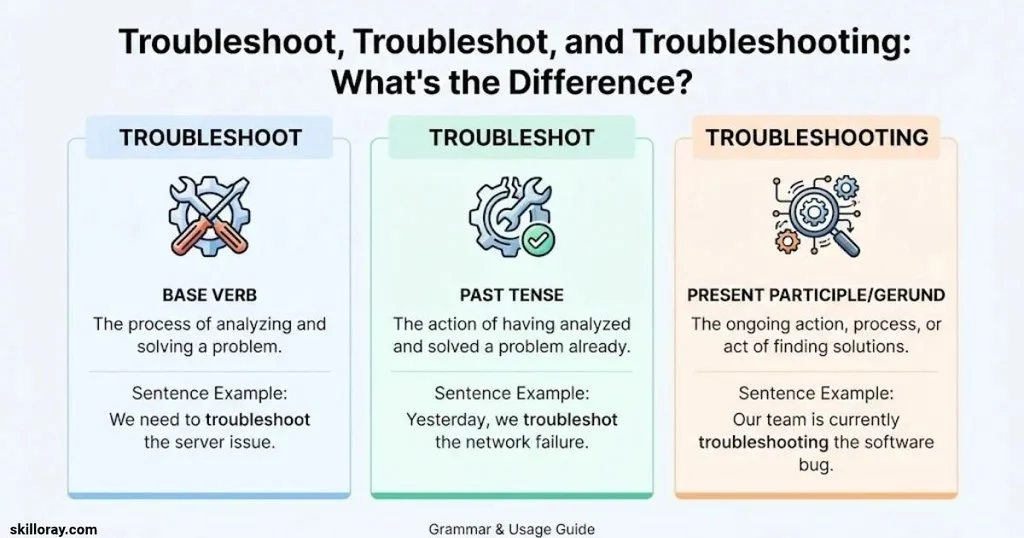
These forms come from the same verb, but each has a different grammatical purpose.
Troubleshoot
Use troubleshoot for regular activities, general facts, instructions, or actions that may happen in the future.
Examples:
- I troubleshoot network problems for small businesses.
- Technicians troubleshoot machines before recommending repairs.
- You should troubleshoot the connection before replacing the router.
Troubleshot
Use troubleshot for an action completed in the past. It also works as the past participle with helping verbs.
Examples:
- The technician troubleshot the computer yesterday.
- She has troubleshot similar problems before.
- They had troubleshot the system before the manager arrived.
Troubleshooting
Use troubleshooting for an action that is happening or as a noun describing the process of finding and fixing problems.
Examples:
- The team is troubleshooting a network failure.
- Troubleshooting the printer took longer than expected.
- Basic troubleshooting can resolve many common problems.
Pay attention to the helping verbs in the second group. Has troubleshot and had troubleshot use the past participle, while is troubleshooting describes an ongoing action.
Common Mistakes When Using Troubleshoot
A few common errors can make this verb confusing, especially when you’re writing about something that happened in the past.
| Incorrect or less-preferred usage | Better choice |
| He troubleshoot the machine yesterday. | He troubleshot the machine yesterday. |
| We have troubleshoot the issue. | We have troubleshot the issue. |
| She is troubleshot the network. | She is troubleshooting the network. |
| He troubleshooted the printer. | He troubleshot the printer. (Preferred standard form) |
The last example needs a little context: troubleshooted is a recorded variant, not simply a nonexistent word. However, troubleshot is the better choice when you want to follow the form given by Cambridge and Oxford.
Frequently Asked Questions
What is the past tense of troubleshoot?
The past tense of troubleshoot is troubleshot. For example, “The technician troubleshot the computer yesterday.”
Is troubleshooted grammatically correct?
Troubleshooted is recorded as a variant by Dictionary.com. However, Cambridge and Oxford give troubleshot as the past-tense form. For formal and professional writing, troubleshot is the safer choice.
What is the past participle of troubleshoot?
The past participle is troubleshot. For example, “The IT team has troubleshot this type of problem before.”
Is troubleshoot an irregular verb?
Yes. Troubleshoot is an irregular verb because its standard past-tense form is troubleshot, not simply troubleshooted.
What are the three forms of troubleshoot?
The three main forms are:
- Base form: Troubleshoot
- Past tense: Troubleshot
- Past participle: Troubleshot
What is the difference between troubleshoot and troubleshooting?
Troubleshoot is the base verb, while troubleshooting is its present participle and can also function as a noun.
For example:
- I troubleshoot computer problems.
- I am troubleshooting a computer problem.
Can I use troubleshot on my resume?
Yes. Troubleshot is appropriate for professional resumes, particularly when describing technical experience.
For example: “Troubleshot network connectivity issues and restored access for employees.”
Final Thoughts
The standard past tense of troubleshoot is troubleshot, and its past participle uses the same form. Although troubleshooted is recorded as a variant by some dictionaries, troubleshot is the more widely recommended choice in major learner’s dictionaries. Remember troubleshoot, troubleshot, troubleshot when writing about technical problems you’ve already investigated or fixed.

I am Olivia Brown, a professional English editor and grammar writer who believes that great writing begins with a strong foundation in grammar. I have spent years creating educational resources that help students and professionals improve their writing, avoid common errors, and communicate more effectively. I strive to provide clear explanations and practical examples that make grammar easy to understand and apply.
Books: English Grammar Essentials and Modern Writing Success
 James Walker
 Daniel Carter