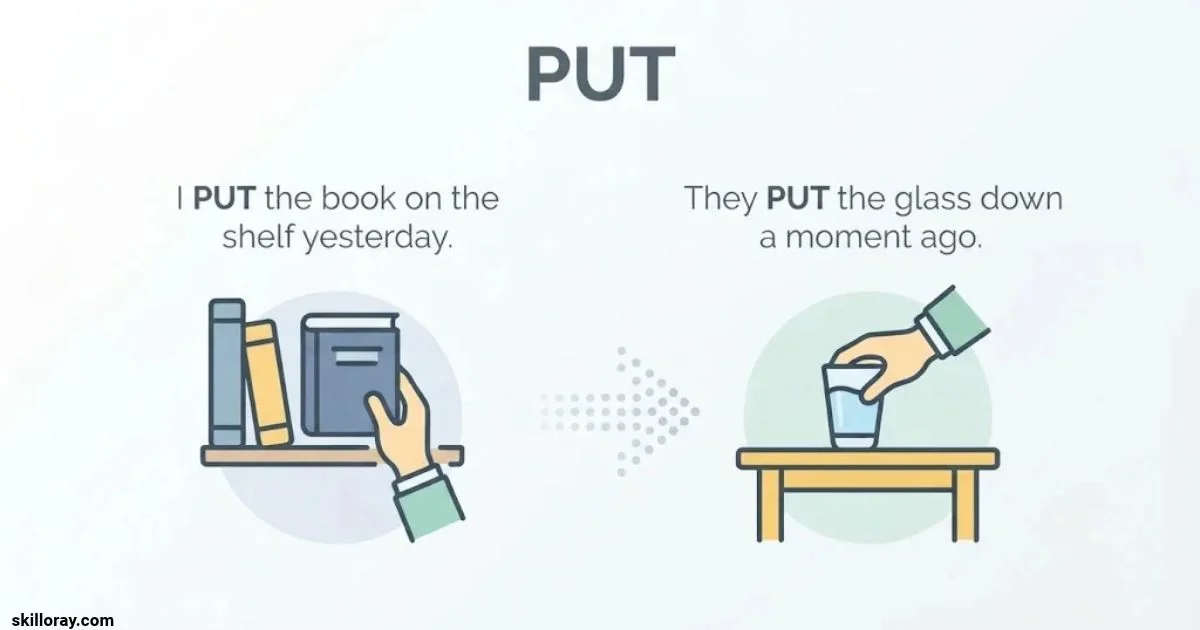
Have you ever wondered whether the past tense of putting is putted or something else? You’re not alone! English learners often find this word confusing because its past form doesn’t follow the usual spelling rules. I’ll help you understand it without making grammar feel complicated.
The past tense of putting is put, not putted, and it stays the same in the present, past, and past participle forms. Once you understand this simple rule, you’ll never have to guess which form to use again!
In this guide, you’ll learn the correct past tense of putting, its meaning, sentence examples, and common grammar mistakes to avoid. Whether you’re a student, an English learner, or simply looking to improve your writing, you’ll find everything explained in simple and practical language.
What Is the Past Tense of Putting?
The past tense of putting is put. More precisely, putting is the -ing form of the verb put, while put is its simple past form.
Here are the main verb forms:
| Verb Form | Word | Example |
| Base form | Put | I put my keys here. |
| Third-person singular | Puts | She puts her phone away. |
| Simple past | Put | He put the bag on the chair. |
| Past participle | Put | They have put everything in place. |
| Present participle | Putting | We are putting up decorations. |
The three main forms are:
Put → Put → Put
Unlike regular verbs, put doesn’t take an -ed ending in the past tense.
Put or Putted: Which Is Correct?
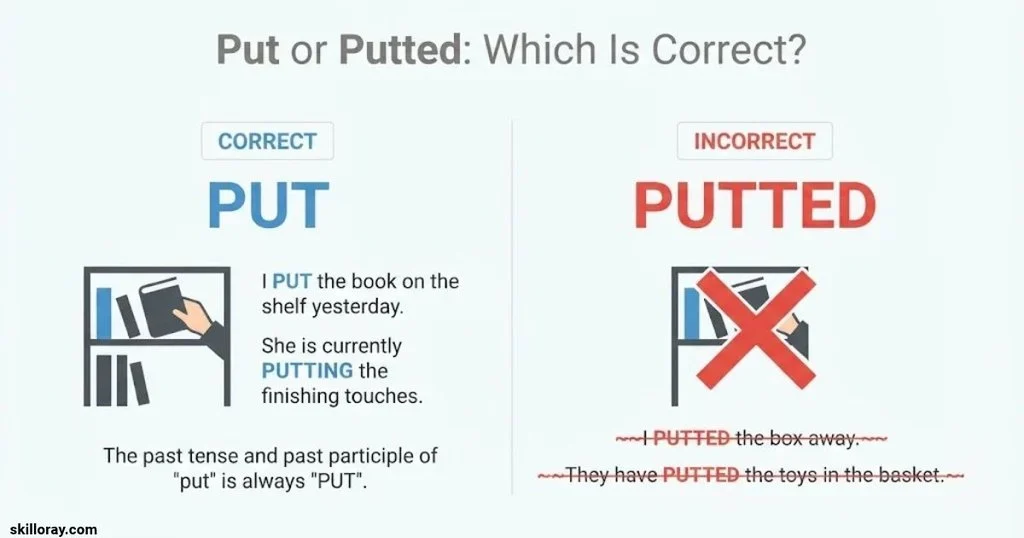
When you mean placing something somewhere, put is the correct past-tense form. You should not use putted for this meaning in standard English.
For example:
- Correct: She put the book on the table.
- Incorrect: She putted the book on the table.
There is one interesting exception. Putt is a separate verb used in golf. It describes hitting a golf ball gently toward the hole, usually on the putting green.
The past tense of this golf verb is putted.
Compare these sentences:
| Sentence | Meaning |
| He put the ball in his bag. | He placed the ball inside the bag. |
| He putted the ball toward the hole. | He hit the golf ball gently toward the hole. |
| She put her phone on the desk. | She placed her phone on the desk. |
| She putted well during the final round. | She performed well with her golf putts. |
So, remember the difference: put means to place something, while putt refers to a particular golf action.
Why Does Put Stay the Same in the Past Tense?
Put is an irregular verb. Most regular English verbs form their past tense by adding -ed, as in walk → walked or clean → cleaned.
However, some irregular verbs keep the same spelling in their base form, simple past, and past participle.
Here are a few examples:
| Base Form | Past Tense | Past Participle |
| Put | Put | Put |
| Cut | Cut | Cut |
| Hit | Hit | Hit |
| Set | Set | Set |
| Shut | Shut | Shut |
| Let | Let | Let |
This pattern explains why you write “I put the groceries away yesterday” rather than “I putted the groceries away.”
How to Use Put, Puts, and Putting in Sentences
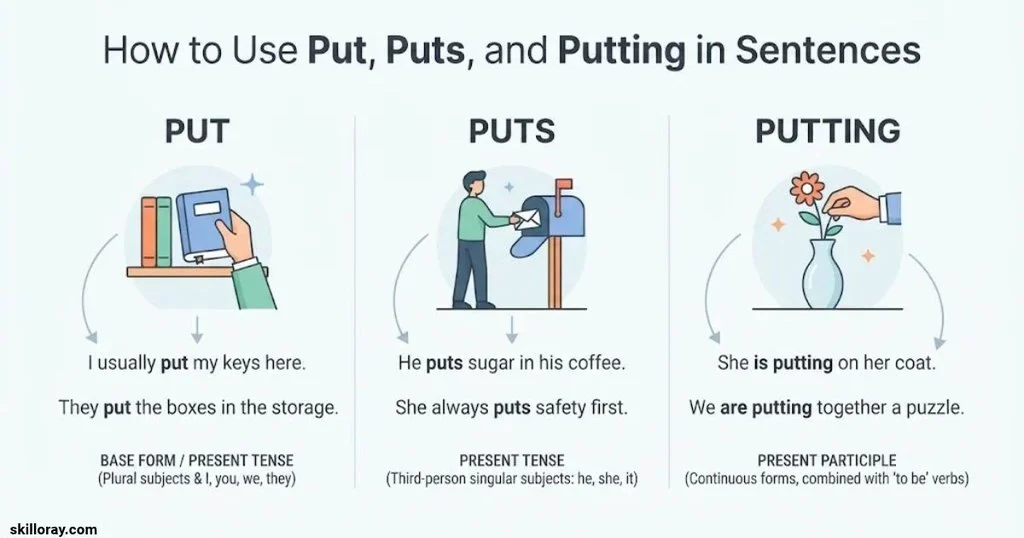
Although these forms come from the same verb, they serve different purposes in a sentence.
Put: Base Form and Simple Past
Use put as the base form after subjects such as I, you, we, and they. It also follows modal verbs such as can, should, and will.
Examples:
- I put my keys near the front door every day.
- Please put your shoes in the cupboard.
- You should put your phone away during class.
The same spelling is used for completed actions in the past:
- I put my keys on the kitchen counter yesterday.
- She put the documents in her bag before leaving.
- They put the chairs outside for the guests.
Puts: Third-Person Singular
Use puts with singular third-person subjects such as he, she, and it in the simple present tense.
Examples:
- My brother puts sugar in his coffee.
- She puts her books on the shelf.
- The teacher puts the assignments on the desk.
Putting: The -ing Form
Use putting when an action is happening or when the verb functions as a noun.
Examples:
- I am putting the dishes away.
- They are putting new furniture in the office.
- Putting things in their proper places saves time.
Notice the difference:
- Past: I put the groceries in the refrigerator.
- Ongoing: I am putting the groceries in the refrigerator.
More Examples of Put in Past-Tense Sentences
Here are some everyday examples to help you recognize the correct form.
At home
- Mom put the fresh flowers in a glass vase.
- I put my jacket on the back of the chair.
- He put the milk in the refrigerator after breakfast.
At school and work
- The teacher put the examination papers on each desk.
- Our manager put the new schedule on the noticeboard.
- I put the completed report in the shared folder.
During everyday activities
- We put our bags in the car before leaving.
- She put her phone on silent during the movie.
- They put extra chairs outside for the visitors.
Each sentence uses put because the action has already happened.
Common Mistakes When Using Put and Putting
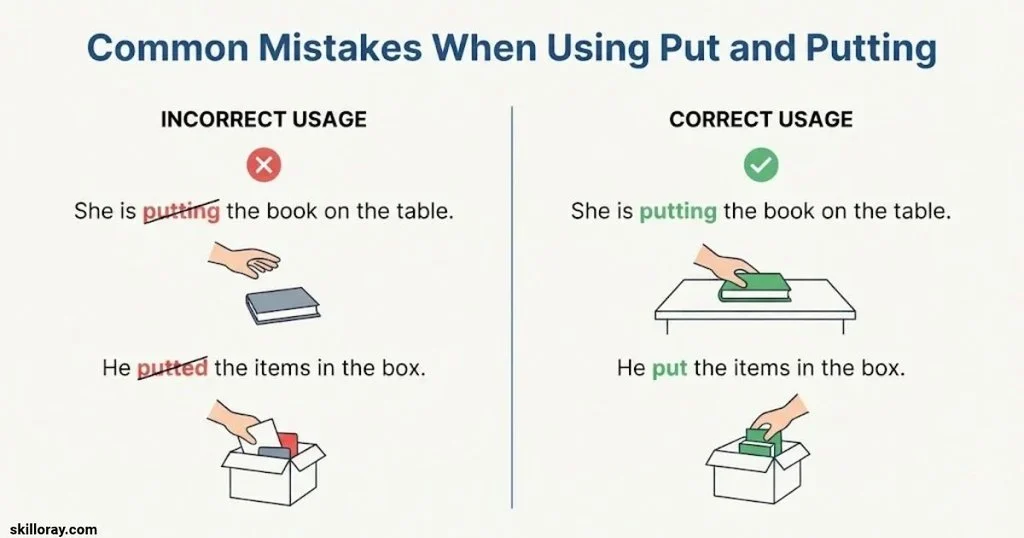
The most common mistake is treating put like a regular verb and adding -ed. Here are a few other errors to avoid.
| Incorrect | Correct |
| She putted the book on the table. | She put the book on the table. |
| He putting his phone away yesterday. | He put his phone away yesterday. |
| They have putting the bags outside. | They have put the bags outside. |
| I am put the clothes away. | I am putting the clothes away. |
| She puts the book there yesterday. | She put the book there yesterday. |
A useful way to choose the right form is to look at the other words in your sentence:
- Yesterday: I put the book on the shelf yesterday.
- Have or has: I have put the book on the shelf.
- Am, is, or are: I am putting the book on the shelf.
These patterns will help you avoid most common mistakes.
Frequently Asked Questions
What is the past tense of putting?
The past tense is put. For example, “I put my laptop on the desk yesterday.”
Is it put or putted?
Use put when you mean placing something somewhere. Putted is the past tense of the separate golf verb putt.
What is the past participle of put?
The past participle is also put. For example, “She has put the documents in the folder.”
Is put an irregular verb?
Yes. Put is an irregular verb because its past tense and past participle do not take the usual -ed ending.
What are the three forms of put?
The three main forms are:
- Base form: Put
- Past tense: Put
- Past participle: Put
Why does putting have two t’s?
The final consonant is doubled when adding -ing to put. Therefore, the correct spelling is putting, not puting.
What is the difference between put and putting?
Put is the base form and simple past form of the verb. Putting is its -ing form, used for ongoing actions and as a gerund.
Examples:
- Past: I put the books away.
- Ongoing: I am putting the books away.
Final Thoughts
The past tense of putting is put because put is an irregular verb that keeps the same spelling in its base form, simple past, and past participle. Use “I put it there yesterday” when describing a completed action. Save putted for the separate golf verb putt. Once you remember this difference, you’ll have no trouble choosing the right form.

I am Daniel Carter, a grammar enthusiast and language educator with over 10 years of experience helping students and professionals improve their English writing and communication skills. I enjoy simplifying complex grammar rules into easy-to-understand lessons that anyone can follow. My goal is to help learners write with confidence, avoid common mistakes, and develop strong communication skills for academic and professional success. I regularly create practical grammar guides, writing tips, and language resources that make learning both enjoyable and effective.
Books: Mastering English Grammar and The Complete Guide to Better Writing
 James Walker
 Olivia Brown