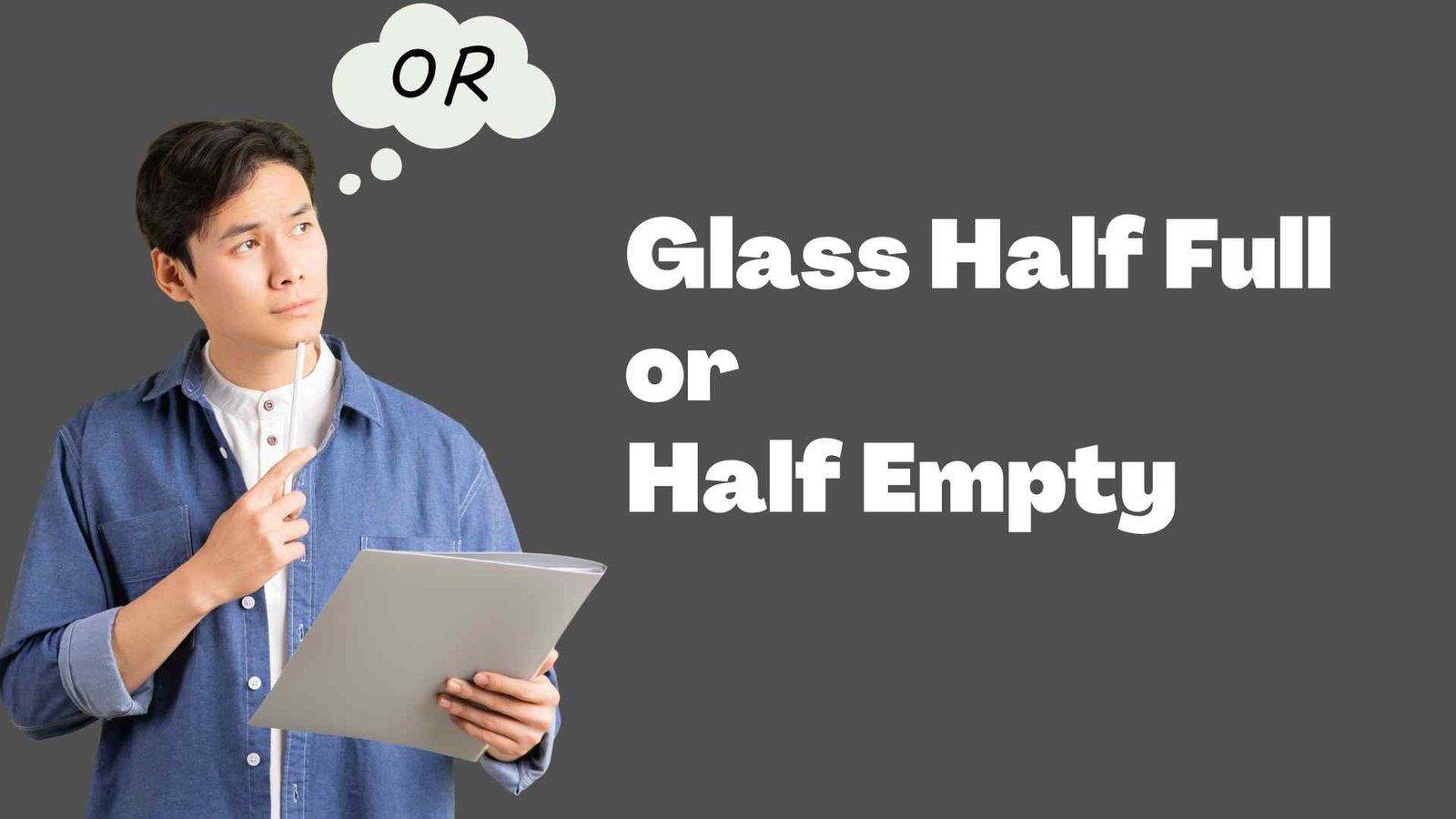
Sometimes, one simple glass can reveal more about your heart than you expect. I believe the way You see what remains can shape how You handle life’s hardest moments.
When I focus on what is still there, I give hope a chance to grow.When You change your perspective, even difficult days can begin to feel lighter.
“Glass Half Full or Half Empty” is more than a common phrase. It helps You understand whether You naturally notice possibilities or problems, while showing how I and You can build a more balanced outlook.
In this guide, you’ll learn:
- The meaning of glass half full and glass half empty
- The psychological difference between the expressions
- When to use each phrase
- Dictionary definitions
- Historical origins
- Real-life examples
- Common mistakes
- Synonyms and antonyms
- Expert recommendations
Quick Answer
Both “glass half full” and “glass half empty” are correct expressions.
They describe the same situation—a glass containing liquid at the halfway mark—but reflect different attitudes. A person who sees the glass as half full is generally optimistic, while someone who sees it as half empty tends to focus on what is missing or negative.
Quick Comparison Table
| Feature | Glass Half Full | Glass Half Empty |
| Meaning | Focus on what is present | Focus on what is missing |
| Attitude | Optimistic | Pessimistic |
| Tone | Positive | Negative or cautious |
| Usage | Encouragement and motivation | Criticism or concern |
| Psychological Association | Positive thinking | Negative thinking |
| Formality | Neutral | Neutral |
| Regional Usage | Worldwide | Worldwide |
| Common Contexts | Self-help, motivation, leadership | Analysis, skepticism, caution |
How Are These Expressions Pronounced?
Glass Half Full
IPA: /ɡlæs hæf fʊl/
Syllable Breakdown:
- Glass
- Half
- Full
Glass Half Empty
IPA: /ɡlæs hæf ˈemp.ti/
Syllable Breakdown:
- Glass
- Half
- Emp-ty
Pronunciation Differences
The only pronunciation difference is in the final adjective:
- Full = /fʊl/
- Empty = /ˈemp.ti/
Meaning and Usage
Meaning of Glass Half Full
The phrase glass half full refers to a positive outlook on a situation.
Someone who sees the glass as half full focuses on opportunities, progress, and what has already been achieved.
Examples
- She always sees the glass half full, even during difficult times.
- Investors remained glass-half-full despite market uncertainty.
- His optimistic nature helps him stay motivated.
Meaning of Glass Half Empty
The phrase glass half empty refers to a negative or pessimistic outlook.
A person who sees the glass as half empty concentrates on shortcomings, problems, or losses.
Examples
- He tends to view every situation as a glass-half-empty scenario.
- Critics took a glass-half-empty approach to the new policy.
- She worries more about risks than opportunities.
Main Difference Between Glass Half Full and Glass Half Empty
Although both phrases describe the same amount of liquid, they reveal different mindsets.
| Aspect | Glass Half Full | Glass Half Empty |
| Focus | What exists | What is lacking |
| Emotion | Hopeful | Concerned |
| Outlook | Optimistic | Pessimistic |
| Motivation | Encouraging | Discouraging |
| Interpretation | Gain | Loss |
| Leadership Style | Inspirational | Critical |
| Problem Solving | Opportunity-focused | Risk-focused |
The difference is not physical—it is psychological.
Grammar Rule Section
Unlike comparisons such as “began vs begun” or “affect vs effect,” these expressions do not involve grammar rules or verb forms.
Instead, they function as:
Idiomatic Expressions
Both phrases are idioms used to describe attitudes.
Examples:
- He is a glass-half-full person.
- She has a glass-half-empty perspective.
Adjectival Use
The expressions can modify nouns.
Examples:
- A glass-half-full attitude
- A glass-half-empty viewpoint
Predicate Use
Examples:
- He sees the world as half full.
- She sees it as half empty.
Origin and Etymology

Historical Origin
The concept of the glass being half full or half empty has been associated with philosophy and psychology for centuries.
The expression became particularly popular during the twentieth century when psychologists began studying optimism and pessimism.
Psychological Development
The phrase evolved into a metaphor representing two ways of interpreting the same reality.
Researchers in positive psychology frequently use the example to explain cognitive attitudes.
Language Roots
The words themselves are straightforward:
- Glass comes from Old English and Germanic roots.
- Full originates from Old English “full.”
- Empty comes from Old English “æmettig.”
The metaphorical meaning developed much later.
Dictionary Comparison
Oxford Dictionary
Oxford defines the expression as a way of describing whether someone tends to be optimistic or pessimistic.
Cambridge Dictionary
Cambridge associates the phrase with attitudes toward life and situations.
Merriam-Webster
Merriam-Webster describes it as a metaphor reflecting optimism versus pessimism.
Collins Dictionary
Collins explains the phrase as focusing on positive aspects versus negative aspects of the same situation.
Dictionary Comparison Table
| Dictionary | Treatment |
| Oxford | Optimism vs pessimism |
| Cambridge | Positive or negative outlook |
| Merriam-Webster | Metaphorical attitude indicator |
| Collins | Perspective-based interpretation |
All major dictionaries recognize both expressions as standard English.
Are Both Expressions Correct?
Yes.
Both expressions are grammatically correct and widely accepted.
Neither expression is wrong.
The choice depends entirely on the attitude you wish to communicate.
Use “Glass Half Full” When:
- Emphasizing possibilities
- Encouraging others
- Motivating teams
- Highlighting progress
Use “Glass Half Empty” When:
- Discussing risks
- Expressing concern
- Evaluating shortcomings
- Highlighting challenges
British vs American English

Unlike color vs colour or center vs centre, this is not a regional spelling difference.
Both expressions are used extensively in:
- British English
- American English
- Canadian English
- Australian English
- International English
Comparison Table
| Feature | British English | American English |
| Glass Half Full | Common | Common |
| Glass Half Empty | Common | Common |
| Meaning Difference | None | None |
| Spelling Difference | None | None |
Which Form Is More Common?
Usage often depends on context.
Research from books, media, and professional communication suggests that glass half full appears more frequently because positive language tends to be preferred in motivational and business writing.
Publishing
Authors often favor glass half full when discussing success and growth.
Professional Writing
Leadership and management content frequently promotes a glass-half-full mindset.
Journalism
Journalists use both phrases depending on the tone of the story.
Everyday Conversation
Most people recognize both expressions immediately.
When Should You Use Each Expression?
Academic Writing
Use whichever expression accurately reflects the perspective being discussed.
Example:
- The study examined whether participants were glass-half-full or glass-half-empty thinkers.
Professional Writing
Glass half full is often preferred in leadership communication.
Example:
- Management maintained a glass-half-full outlook despite challenges.
Casual Writing
Both expressions are common.
Example:
- My brother is definitely a glass-half-empty kind of person.
Journalism
Both expressions help describe public opinion.
Example:
- Analysts offered a glass-half-full interpretation of economic growth.
Common Mistakes
Mistake 1: Assuming One Is Wrong
Glass half empty is incorrect.
Glass half empty is a valid expression.
Explanation: Both expressions are standard English.
Mistake 2: Confusing Optimism With Reality
Glass half full means ignoring problems.
Glass half full means focusing on positive aspects while recognizing reality.
Explanation: Optimism is not denial.
Mistake 3: Using the Phrase Literally
The glass is half full, therefore the person is optimistic.
The expression is usually metaphorical.
Explanation: It often describes personality traits rather than actual glasses.
Real-Life Examples
Workplace
- A glass-half-full manager sees opportunities in market changes.
- A glass-half-empty manager focuses on potential risks.
Education
- Optimistic students often take a glass-half-full approach to setbacks.
- Pessimistic students may view poor grades through a glass-half-empty lens.
Relationships
- One partner sees challenges as opportunities to grow.
- The other worries about possible failure.
Sports
- Fans viewed the season as glass half full because the team improved.
- Critics viewed it as glass half empty because the team missed the championship.
Synonyms
Synonyms of Glass Half Full
- Optimistic
- Positive
- Hopeful
- Encouraging
- Upbeat
- Confident
- Constructive
- Forward-looking
Synonyms of Glass Half Empty
- Pessimistic
- Negative
- Doubtful
- Skeptical
- Concerned
- Critical
- Cynical
- Discouraged
Antonyms
Antonyms of Glass Half Full
- Pessimistic
- Negative
- Defeatist
- Cynical
Antonyms of Glass Half Empty
- Optimistic
- Positive
- Hopeful
- Encouraging
Memory Trick
A simple way to remember the difference:
Full = Focus on What You Have
Think:
F = Full = Future Possibilities
Empty = Focus on What Is Missing
Think:
E = Empty = Emphasizing What’s Absent
This quick association helps distinguish the attitudes instantly.
Similar Confusing Expressions
People who search for glass half full or half empty often explore similar concepts.
Related Comparisons
- Optimistic vs Pessimistic
- Positive Thinking vs Negative Thinking
- Hope vs Fear
- Confidence vs Doubt
- Opportunity vs Risk
- Growth Mindset vs Fixed Mindset
Why Do People Search “Glass Half Full or Half Empty”?
Search intent usually falls into several categories.
Meaning Search
People want to know what the phrase means.
Psychology Search
Users are interested in optimism and pessimism.
Personality Search
Many want to understand whether they are naturally optimistic or pessimistic.
Communication Search
Writers and speakers often want to use the phrase correctly.
Common Search Queries
- What does glass half full mean?
- What does glass half empty mean?
- Is glass half full positive?
- Is glass half empty negative?
- Which is better, half full or half empty?
- What does the phrase say about personality?
- Is the glass half full or half empty philosophy?
- Why is the phrase famous?
- Are both expressions correct?
- How do psychologists interpret the phrase?
FAQs
1. Which expression is correct?
Both glass half full and glass half empty are correct.
2. Are both expressions standard English?
Yes, both are widely accepted in standard English.
3. What is the main difference?
The difference is perspective rather than meaning.
4. Which expression is more positive?
Glass half full is generally considered more positive.
5. Which expression is more negative?
Glass half empty is usually associated with pessimism.
6. Are these expressions idioms?
Yes, they function as idiomatic expressions.
7. Is there a grammar difference?
No. The difference is conceptual rather than grammatical.
8. Are the expressions used worldwide?
Yes. They are common across English-speaking countries.
9. Which phrase is more common in business?
Glass half full is often preferred in leadership and motivational communication.
10. Can someone be both?
Yes. Many people are optimistic in some situations and pessimistic in others.
11. Do psychologists use these expressions?
Yes. They are frequently used when discussing optimism and pessimism.
12. Is one phrase better than the other?
Neither is inherently better. Each reflects a different perspective.
Expert Recommendation
Editors, teachers, psychologists, and major dictionaries agree that both expressions are valid.
However, the phrase you choose should match your intended message.
Recommended Usage
Use glass half full when:
- Motivating others
- Highlighting progress
- Encouraging resilience
Use glass half empty when:
- Discussing risks
- Evaluating weaknesses
- Identifying potential problems
The best choice depends on context rather than correctness.
Final Verdict
The debate over glass half full or half empty is not about grammar, spelling, or correctness. Both expressions are accepted, widely understood, and used throughout the English-speaking world.
The real difference lies in perspective.
A glass-half-full person focuses on opportunities, progress, and possibilities. A glass-half-empty person focuses on limitations, risks, and what remains to be done.
Key Takeaways
- Both expressions are correct.
- Neither phrase is grammatically superior.
- Glass half full reflects optimism.
- Glass half empty reflects pessimism.
- Both are recognized by major dictionaries.
- The difference is psychological rather than linguistic.
- Use the expression that best matches your intended tone and message.
Practical Usage Advice
If your goal is to inspire, encourage, or motivate, choose glass half full.
If your goal is to evaluate risks, identify problems, or express caution, choose glass half empty.
Both describe the same reality—but from different angles.

I am Daniel Carter, a grammar enthusiast and language educator with over 10 years of experience helping students and professionals improve their English writing and communication skills. I enjoy simplifying complex grammar rules into easy-to-understand lessons that anyone can follow. My goal is to help learners write with confidence, avoid common mistakes, and develop strong communication skills for academic and professional success. I regularly create practical grammar guides, writing tips, and language resources that make learning both enjoyable and effective.
Books: Mastering English Grammar and The Complete Guide to Better Writing
 James Walker
 Olivia Brown