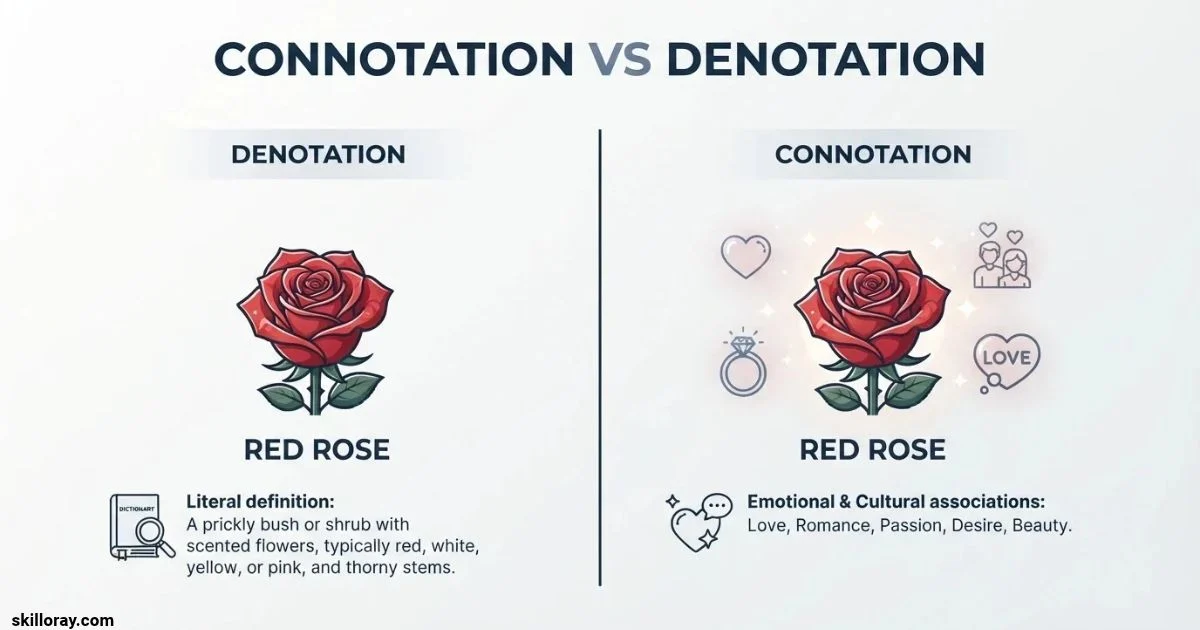
Words can have more than one layer of meaning, and understanding those layers can completely change how you interpret a sentence. Have you ever noticed how two words can mean almost the same thing but create very different feelings? That’s where connotation and denotation come in.
Denotation is a word’s direct, dictionary meaning, while connotation refers to the feelings, ideas, or associations connected to it. If you want to understand how these meanings work and why choosing the right word matters, you’re in the right place!
In this guide, I’ll explain the difference between connotation and denotation with simple definitions, clear examples, and practical comparisons. You’ll learn how these two concepts shape communication, influence emotions, and help you choose the right words in everyday writing and conversation.
What Is the Difference Between Connotation and Denotation?
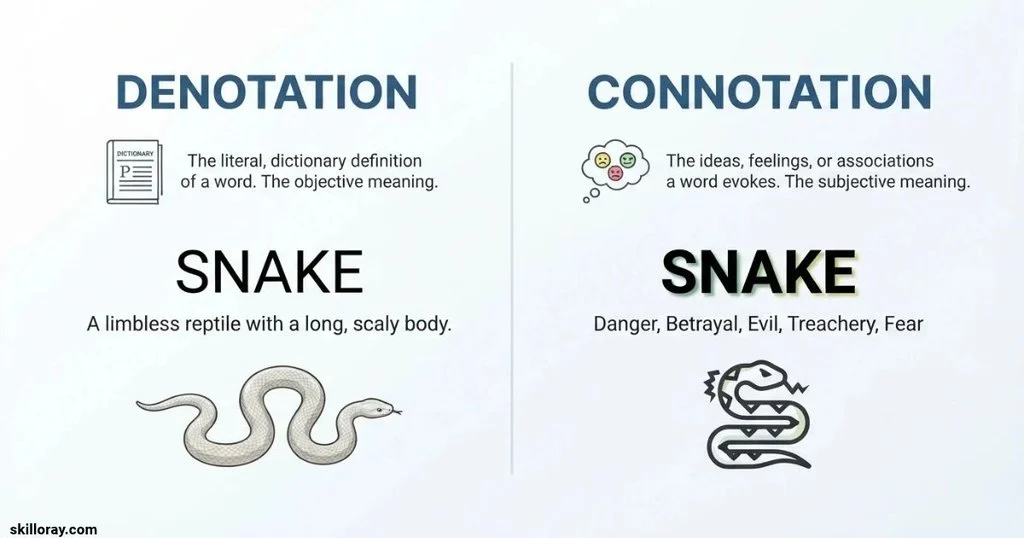
The main difference is simple: denotation tells you what a word directly means, while connotation tells you what it suggests beyond that meaning.
Denotation focuses on the literal meaning of a word in a particular context. Connotation includes the feelings, cultural associations, and ideas people connect with it.
Consider slim and skinny. Both can describe someone with a relatively thin body, but slim often sounds complimentary, while skinny can sound critical or suggest concern.
Here’s a quick comparison:
| Connotation | Denotation |
| Suggested or associated meaning | Direct or literal meaning |
| Includes feelings and cultural associations | Focuses on what a word refers to |
| Can be positive, negative, or neutral | Describes the literal sense in context |
| May vary with culture and personal experience | Generally shared by speakers of the same language |
| Helps establish tone and mood | Helps communicate basic information |
Both meanings work together. Denotation helps readers understand the message, while connotation influences how that message feels.
What Is Denotation?
Denotation is the literal or direct meaning of a word. It’s the meaning you would generally find in a dictionary, rather than the feelings or associations the word might create.
For example, the denotation of snake is a long, legless reptile. This definition identifies the animal without suggesting whether it’s frightening, dangerous, or interesting.
Here are more examples:
| Word | Denotation |
| Rose | A type of flowering plant |
| Child | A young person |
| House | A building used as a place to live |
| Ocean | A large body of salt water |
| Winter | The coldest season of the year |
| Snake | A legless reptile |
Some words have more than one denotation. Take bank, for example. It can refer to a financial institution or the land beside a river. The surrounding sentence helps you identify which literal meaning is intended.
Examples of Denotation in Sentences
These sentences use words according to their direct meanings:
- A rose was growing beside the garden wall.
- The child played with a wooden toy.
- Their house has three bedrooms.
- The ocean looked calm in the morning.
- Winter usually brings colder weather to this region.
- A snake moved through the grass.
Each sentence describes something directly. The words identify people, places, objects, or natural conditions without relying on emotional associations.
What Is Connotation?
Connotation refers to the feelings, ideas, or associations a word suggests beyond its literal meaning. These associations can come from culture, personal experiences, social attitudes, and common language use.
For example, home refers to a place where someone lives, but it can also suggest warmth, safety, family, and belonging.
The same idea applies to words describing people. Calling someone confident often sounds positive, while calling that person arrogant suggests an unfavorable attitude.
Connotations generally fall into three categories.
Positive Connotation
A positive connotation creates a favorable impression. Writers use positive words when they want to make a person, place, or experience sound appealing.
Examples include:
- Confident: Suggests self-assurance and belief in one’s abilities.
- Frugal: Often suggests careful and sensible spending.
- Youthful: Can suggest energy, freshness, or vitality.
- Home: Often brings feelings of comfort and belonging.
- Determined: Suggests persistence and commitment to a goal.
Example sentences:
- She is a confident speaker who expresses her ideas clearly.
- My grandfather is frugal and rarely wastes money.
- The team remained determined despite the difficult conditions.
These words help create a favorable impression, although their effect can still depend on the situation.
Negative Connotation
A negative connotation creates an unfavorable impression. It can make a description sound critical, disapproving, or unkind.
Examples include:
- Arrogant: Suggests an exaggerated sense of self-importance.
- Stingy: Suggests an unwillingness to spend or share money.
- Childish: Often suggests immature behavior.
- Nosy: Suggests unwanted interest in other people’s private matters.
- Scrawny: Often suggests someone is unpleasantly thin.
Example sentences:
- He sounded arrogant when he dismissed everyone’s suggestions.
- The stingy owner refused to provide basic supplies.
- Stop being nosy and let them handle their own business.
These words communicate more than a simple description. They also reveal the speaker’s attitude toward the subject.
Neutral Connotation
A neutral connotation carries little strong emotional judgment. It describes something without deliberately making it sound especially positive or negative.
Examples include:
- Child: A young person.
- House: A building used for living.
- Rectangle: A four-sided shape with four right angles.
- Monday: A day of the week.
- Notebook: A book of blank or lined pages used for writing.
Example sentences:
- The child is playing outside.
- They bought a house near the school.
- She drew a rectangle on the board.
- The meeting is scheduled for Monday.
Context still matters. Even a word that usually sounds neutral can take on a positive or negative association in a particular situation.
Connotation vs Denotation Examples
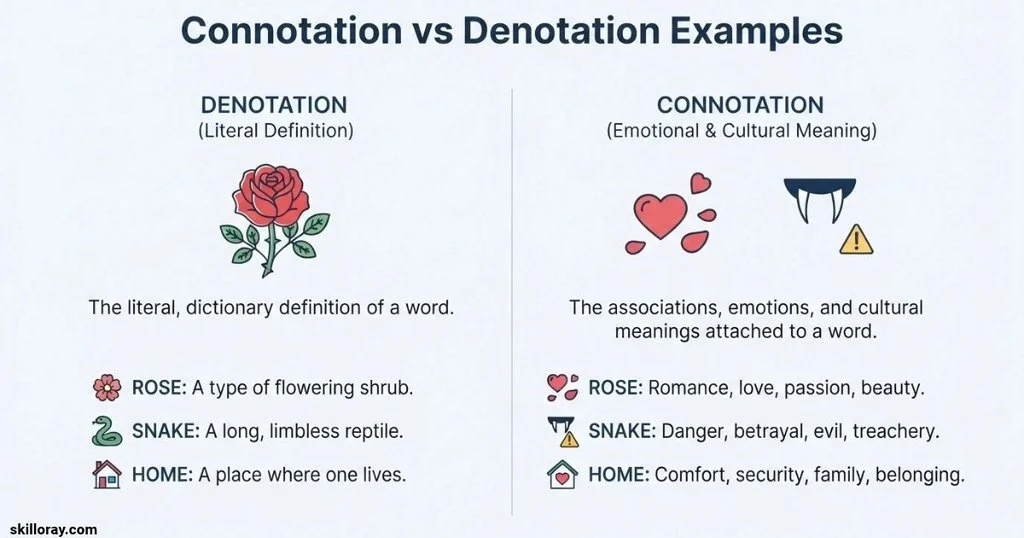
Comparing similar words is one of the easiest ways to understand the difference. The words may describe related things, but their connotations can change the impression a reader receives.
House vs. Home
Both words can refer to a place where someone lives, but they don’t create exactly the same impression.
- House: Usually refers to the physical building.
- Home: Often suggests family, comfort, memories, and belonging.
Compare:
- They bought a new house last month.
- After a long trip, I was happy to return home.
The first sentence focuses on a building. The second emphasizes the personal feeling of returning to a familiar place.
Slim vs. Skinny
Both slim and skinny can describe someone with a relatively thin body. However, their emotional associations are different.
- Slim: Often sounds complimentary or positive.
- Skinny: Can sound critical or suggest that someone is too thin.
Compare:
- She has a slim figure.
- He looked skinny after being ill.
The first sentence may sound like a compliment. The second can express concern about someone’s appearance.
Frugal vs. Stingy
Both words relate to spending money, but they communicate different attitudes.
- Frugal: Usually describes someone who spends carefully and avoids waste.
- Stingy: Suggests someone is unwilling to spend or share, even when it may be reasonable.
Compare:
- My grandmother is frugal and always plans her expenses.
- The stingy owner refused to pay workers fairly.
The first description often sounds positive, while the second expresses criticism.
Confident vs. Arrogant
These words both describe how someone views their own abilities, but their connotations differ.
- Confident: Suggests healthy self-belief.
- Arrogant: Suggests an exaggerated sense of superiority.
Compare:
- She is confident about her presentation.
- She sounded arrogant when she claimed nobody else could do the job.
The choice between these words changes how readers judge the person’s behavior.
Why Are Connotation and Denotation Important?
Understanding these concepts helps you become a more thoughtful writer, reader, and speaker. A word’s direct meaning tells you what it describes, but its connotation can influence how people receive the message.
They Help You Choose Better Words
Several words may have similar meanings without expressing the same attitude.
For example, inexpensive, cheap, and affordable all relate to low cost. However, cheap can sometimes suggest poor quality, while affordable usually sounds more favorable.
Choosing the right word helps you communicate what you actually intend.
They Improve Your Writing
Writers use connotations to create a particular impression. A positive word can make a character seem admirable, while a negative word can make similar behavior appear unpleasant.
Consider these descriptions:
- The man walked slowly through the garden.
- The man wandered lazily through the garden.
Both describe slow movement, but wandered lazily adds an impression of carelessness or a lack of purpose.
Understanding denotation keeps your meaning clear, while connotation helps you control your tone.
They Help You Understand Literature
Authors often choose words for more than their dictionary meanings. In stories, poems, and novels, certain words can suggest fear, happiness, loneliness, hope, or conflict.
For example, describing a room as a sanctuary suggests peace and safety. Calling the same room a prison creates a feeling of restriction.
Recognizing these associations helps you understand an author’s message and the atmosphere They Make Communication More Effective
A word that sounds harmless to one person may feel rude or disrespectful to another. Culture, personal experience, and context can influence how people interpret language.
Understanding connotation helps you avoid unintended criticism and choose words that suit your audience.
How to Identify Connotation and Denotation in a Sentence
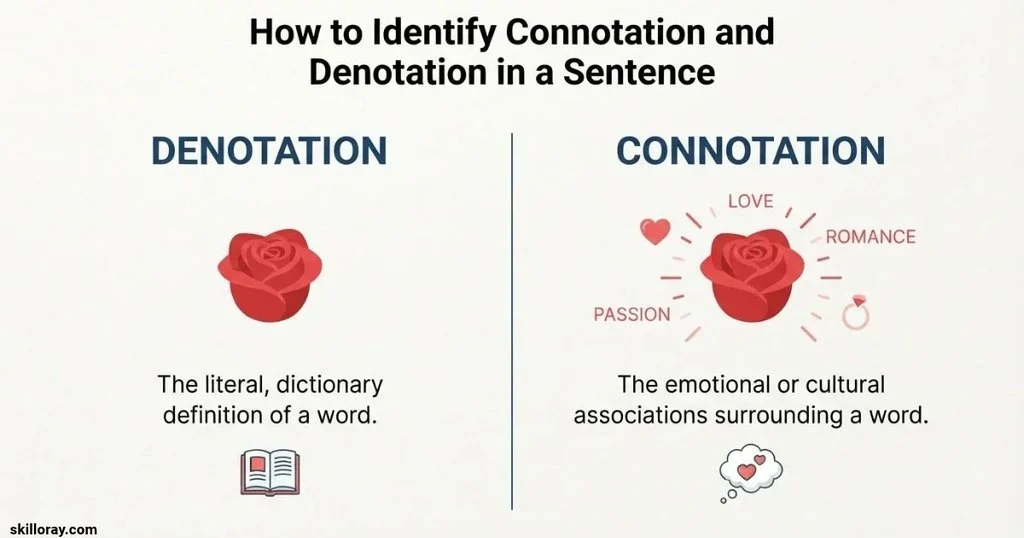
You can identify both meanings by looking at the word itself and the way it’s used.
Step 1: Find the direct meaning.
Ask what the word literally describes. Check a dictionary if you’re unsure.
Step 2: Look for associated feelings or ideas.
Think about what the word suggests beyond its basic meaning. Does it sound positive, negative, or neutral?
Step 3: Read the surrounding sentence.
Context can change how a word is understood. A word that usually sounds positive may carry a negative impression in a particular situation.
Step 4: Consider the writer’s attitude.
Ask whether the writer sounds approving, critical, humorous, or neutral.
For example:
“After years of hard work, she finally achieved her dream.”
The word achieved directly means that she successfully reached a goal. In this sentence, it also creates a positive impression of effort, progress, and success.
Looking at both meanings helps you understand not only what a sentence says but also the impression it creates.
Practice: Can You Identify Connotation?
Try choosing the word with the more positive connotation in each pair.
1. Which word usually sounds more positive?
- Frugal
- Stingy
2. Which word is generally more complimentary?
- Slim
- Skinny
3. Which word suggests healthy self-belief?
- Confident
- Arrogant
Answers:
- Frugal
- Slim
- Confident
The words in each pair have related meanings, but their connotations differ. That’s why word choice matters in everyday communication and writing.
Common Mistakes When Using Connotation and Denotation
These concepts are easy to confuse, especially when you’re learning how words communicate different meanings.
| Common Mistake | Correct Understanding |
| Treating connotation as the dictionary definition | Connotation refers to suggested or associated meaning. |
| Assuming denotation includes personal feelings | Denotation focuses on the literal meaning in context. |
| Thinking every word has a negative connotation | Connotations can be positive, negative, or neutral. |
| Assuming synonyms always create the same impression | Similar words can have different emotional associations. |
| Ignoring context when interpreting a word | Context can influence how a word is understood. |
One important point: connotations aren’t always identical for everyone. A word may create a positive association for one person and a negative one for another because of their experiences or cultural background.
Frequently Asked Questions
What is the main difference between connotation and denotation?
Denotation is the direct or literal meaning of a word in context. Connotation is the feeling, idea, or association connected to that word beyond its literal meaning. For example, home denotes a place where someone lives but often connotes comfort and belonging.
What are three examples of connotation?
Three examples include home, which often suggests comfort; stingy, which suggests unwillingness to share; and youthful, which can suggest energy and freshness. These associations go beyond the words’ basic meanings.
What are the three types of connotation?
The three commonly discussed types are positive, negative, and neutral. Positive connotations create favorable impressions, negative connotations create unfavorable impressions, and neutral connotations carry little strong emotional judgment.
Can two words have the same denotation but different connotations?
Yes. Words such as slim and skinny can describe a similar body shape, but slim often sounds complimentary, while skinny can sound critical. Their associations influence how readers interpret them.
Is connotation always emotional?
Not necessarily. Connotation can include emotions, cultural associations, social attitudes, and ideas suggested by a word. It may create a particular impression even when the word doesn’t express a strong emotion.
Why is denotation important in writing?
Denotation helps writers communicate accurate and clear information. When readers understand the direct meaning of a word, they’re less likely to misunderstand the basic message. It is especially useful in academic, technical, and informational writing.
How can I remember the difference between connotation and denotation?
Remember this simple distinction: denotation is the dictionary meaning, while connotation is the connection or feeling associated with a word. If you’re asking what a word directly means, think of denotation. If you’re asking what it suggests, think of connotation.
Final Thoughts
When choosing between similar words, think about the impression each one creates. Frugal may describe someone who manages money carefully, while stingy can make that person sound ungenerous. Both relate to spending, but they communicate different attitudes.
That’s the value of understanding connotation and denotation. One helps you recognize a word’s direct meaning, while the other helps you understand its associations. Paying attention to both makes your writing clearer, more thoughtful, and more effective.

I am James Walker, an English language specialist with extensive experience in grammar, editing, and academic writing. I enjoy helping students, bloggers, and professionals strengthen their writing by explaining grammar concepts in a clear and engaging way. My focus is on providing accurate, practical, and easy-to-follow guidance that helps learners communicate more effectively in everyday and professional situations.
Books: Perfect English Grammar Handbook and Advanced Writing Techniques
 Daniel Carter
 Olivia Brown